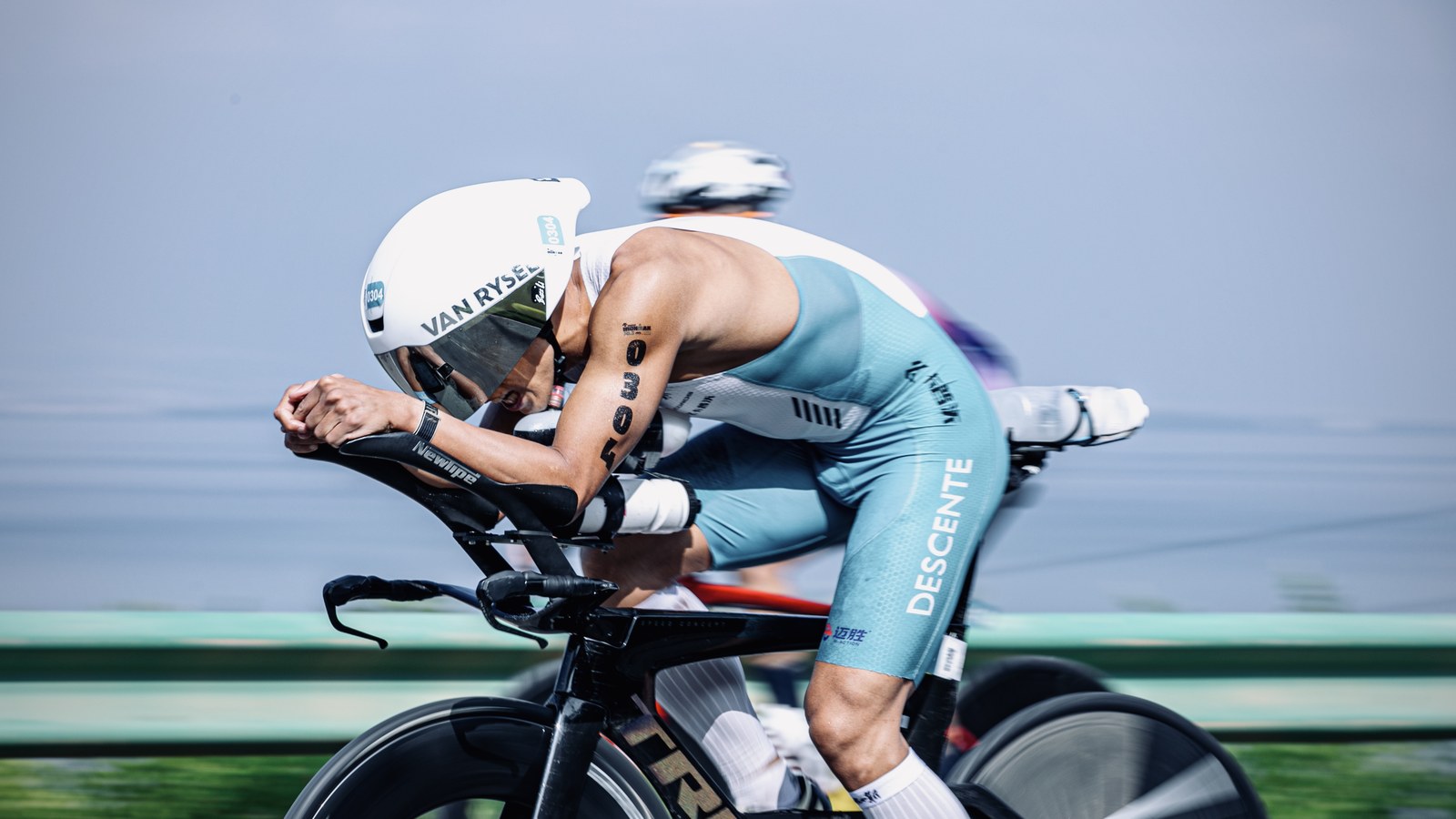
IRONMAN 70.3 came to Dali, Yunnan, for the first time this year. Flat course, mild weather. On paper, it looked like a great place to go fast. The real variable was altitude. The course hugs Erhai Lake at close to 2,000 m. Thinner air means you ride faster than you would at sea level. Less oxygen means the run feels harder and you tire sooner. Plenty of athletes started showing altitude sickness symptoms, some mild and some not, soon after they arrived. That was the hardest part of this race to manage.
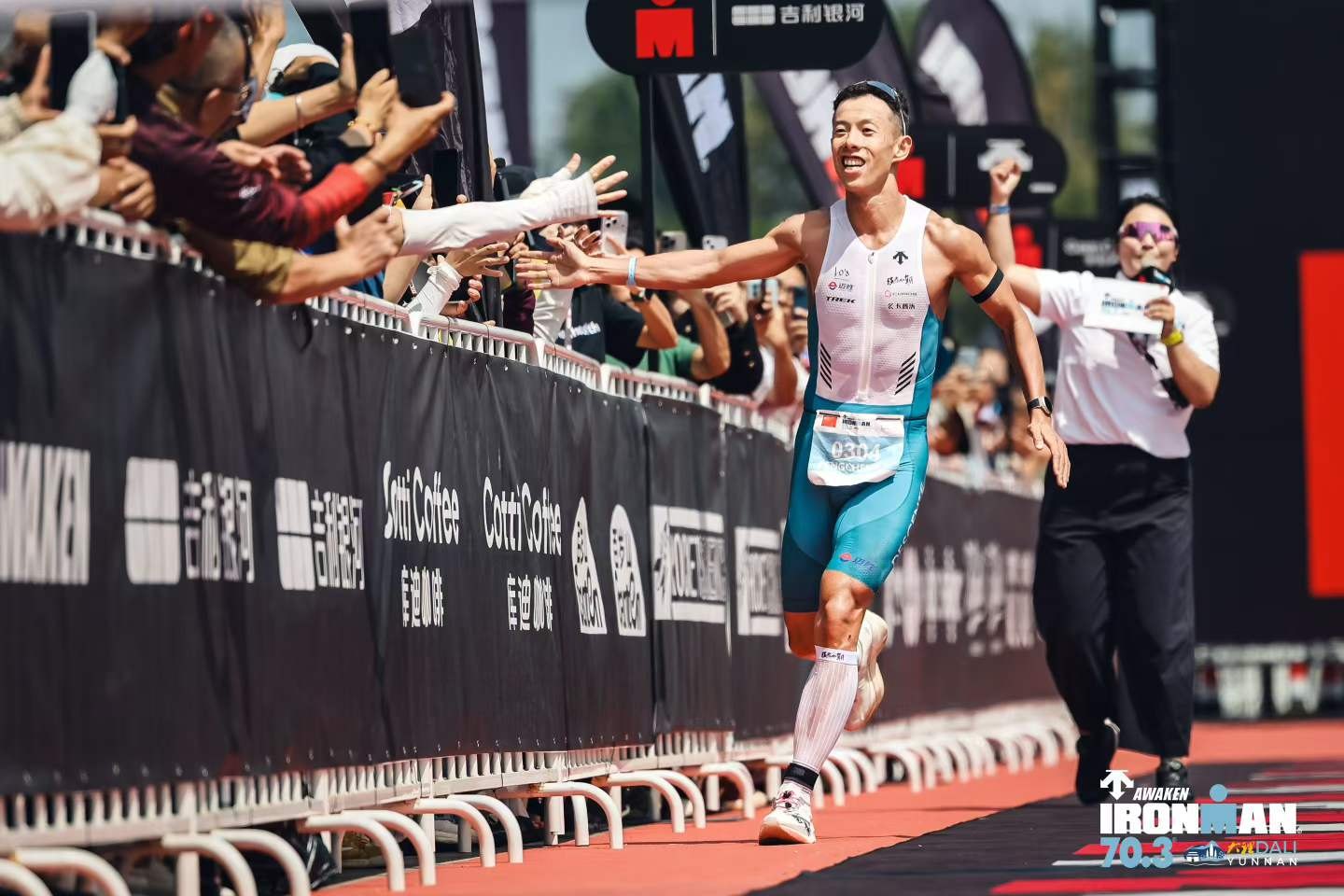
Several of my athletes raced. Two of them are heading to Kona next month and used Dali as a tune-up before the World Championship.
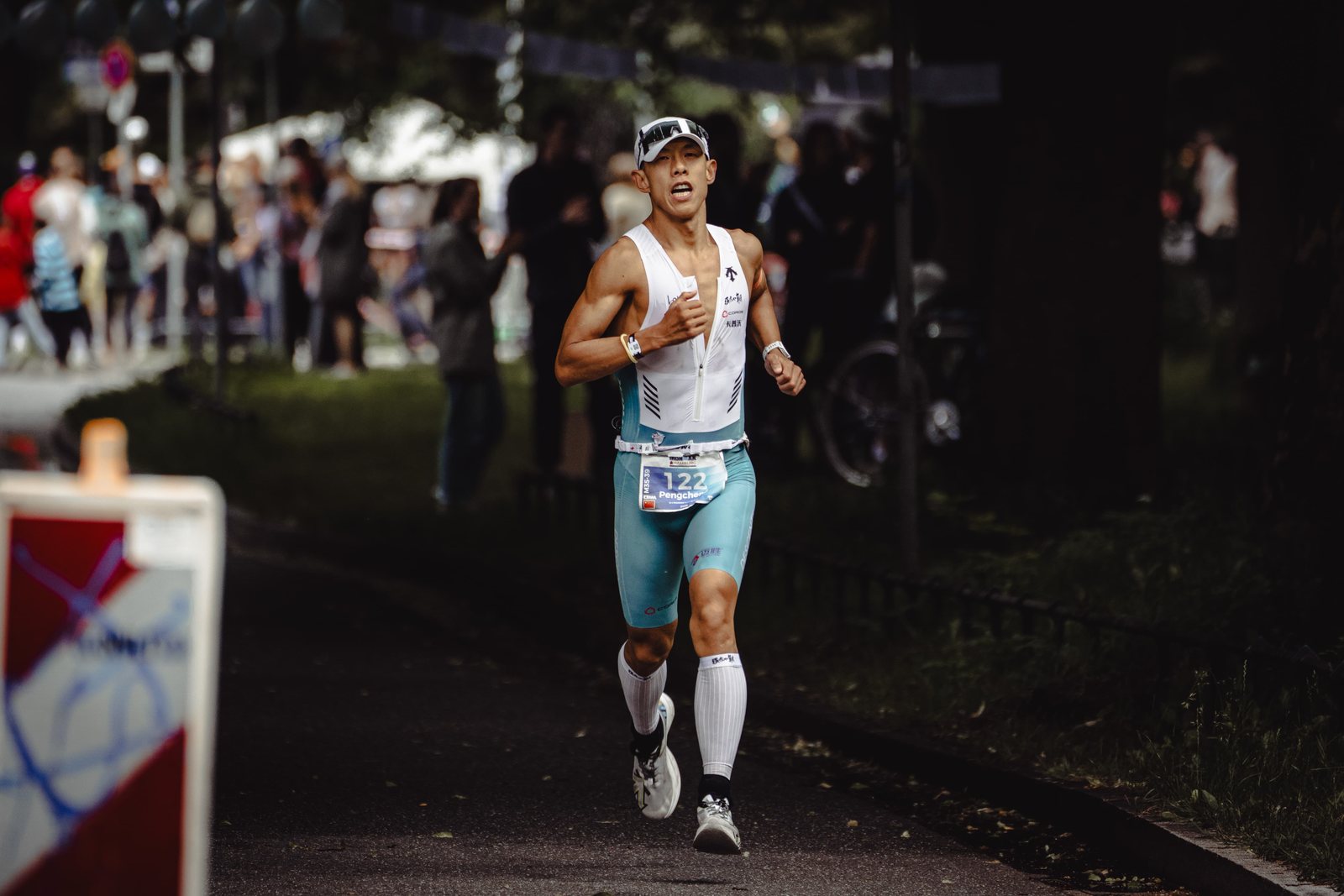
- Li Pengcheng: 3:51:23, men's age-group winner
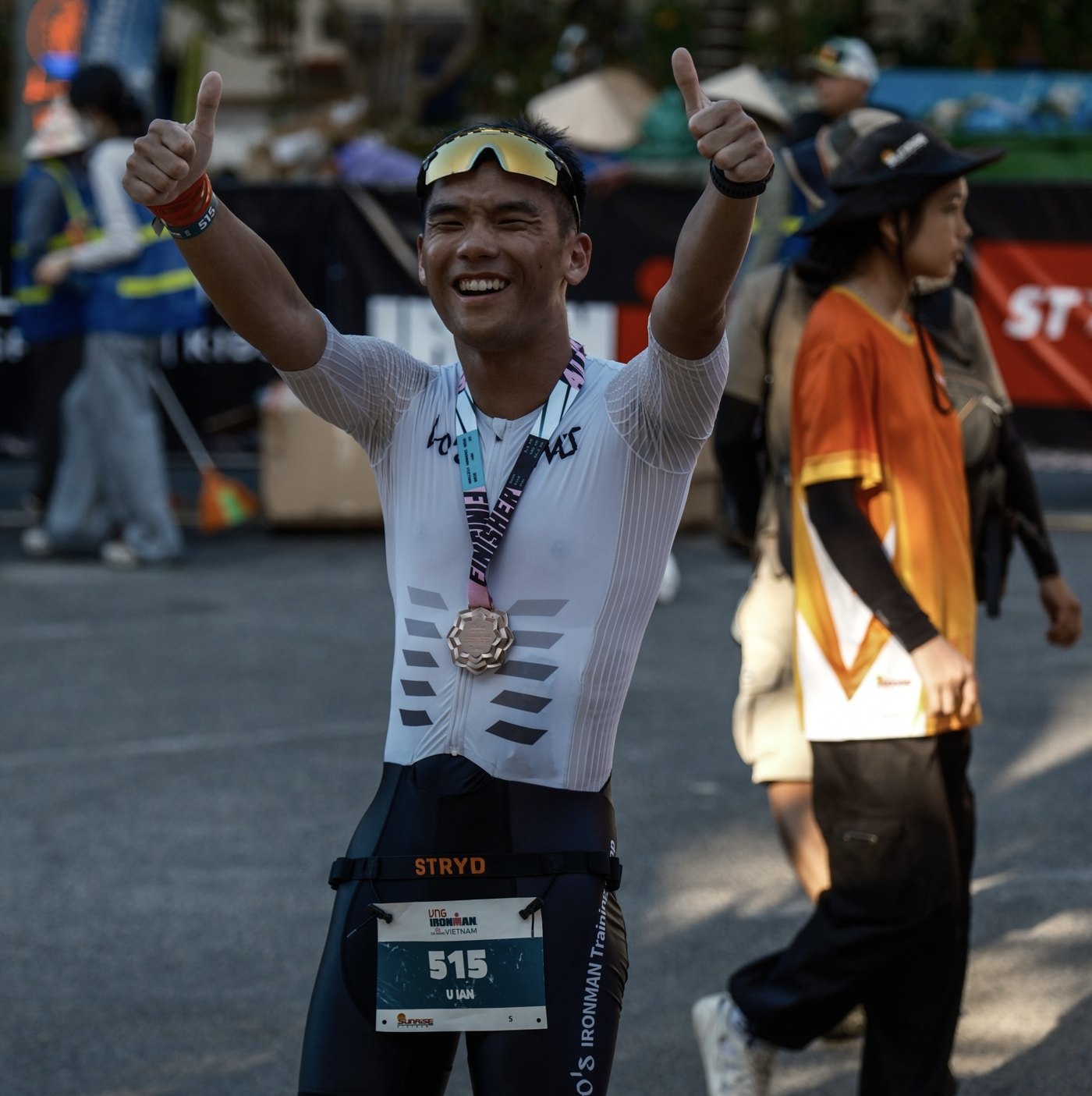
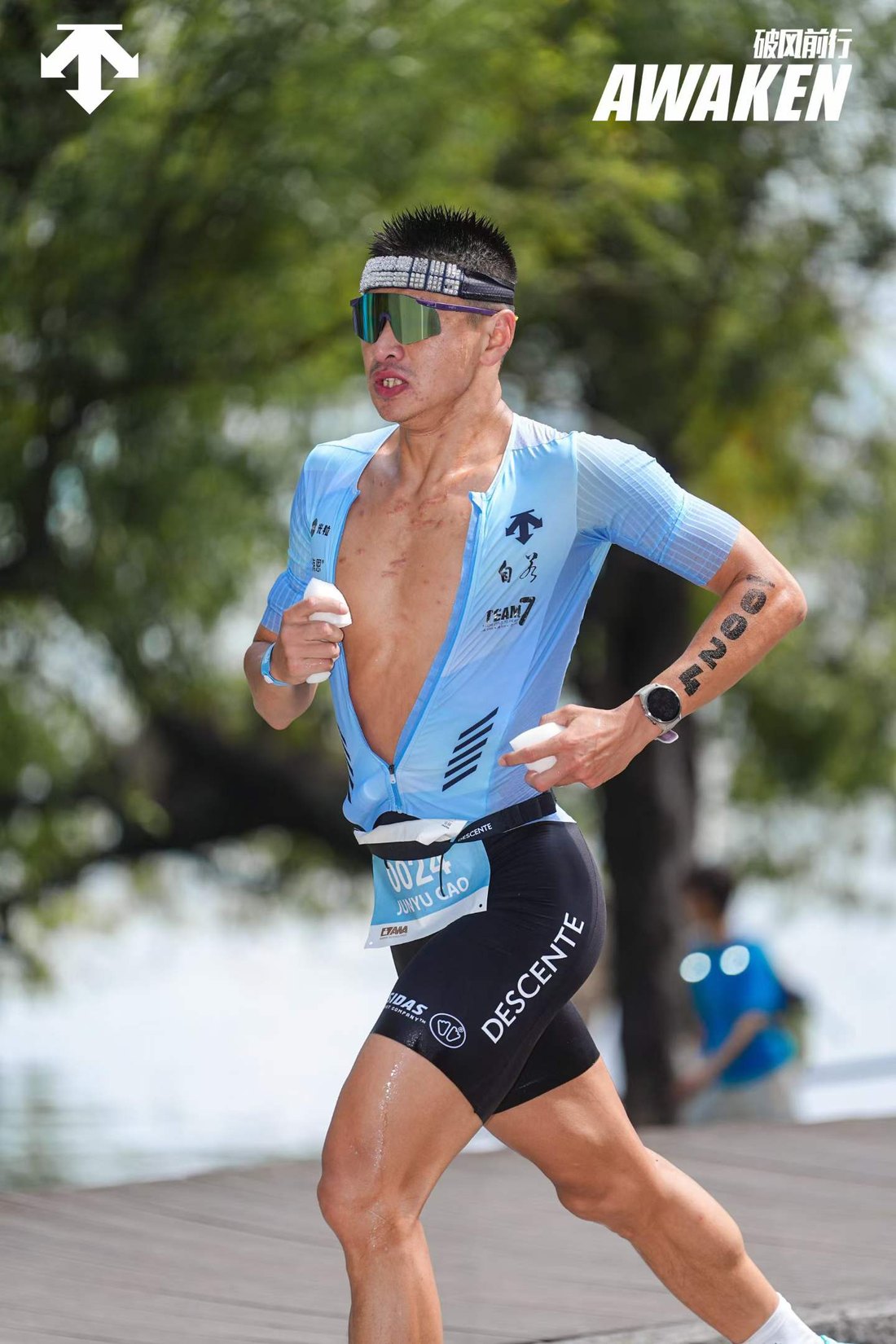
- Cao Junyu: 4:04:04, third in the men's age group
Both were right where I expected them to be.
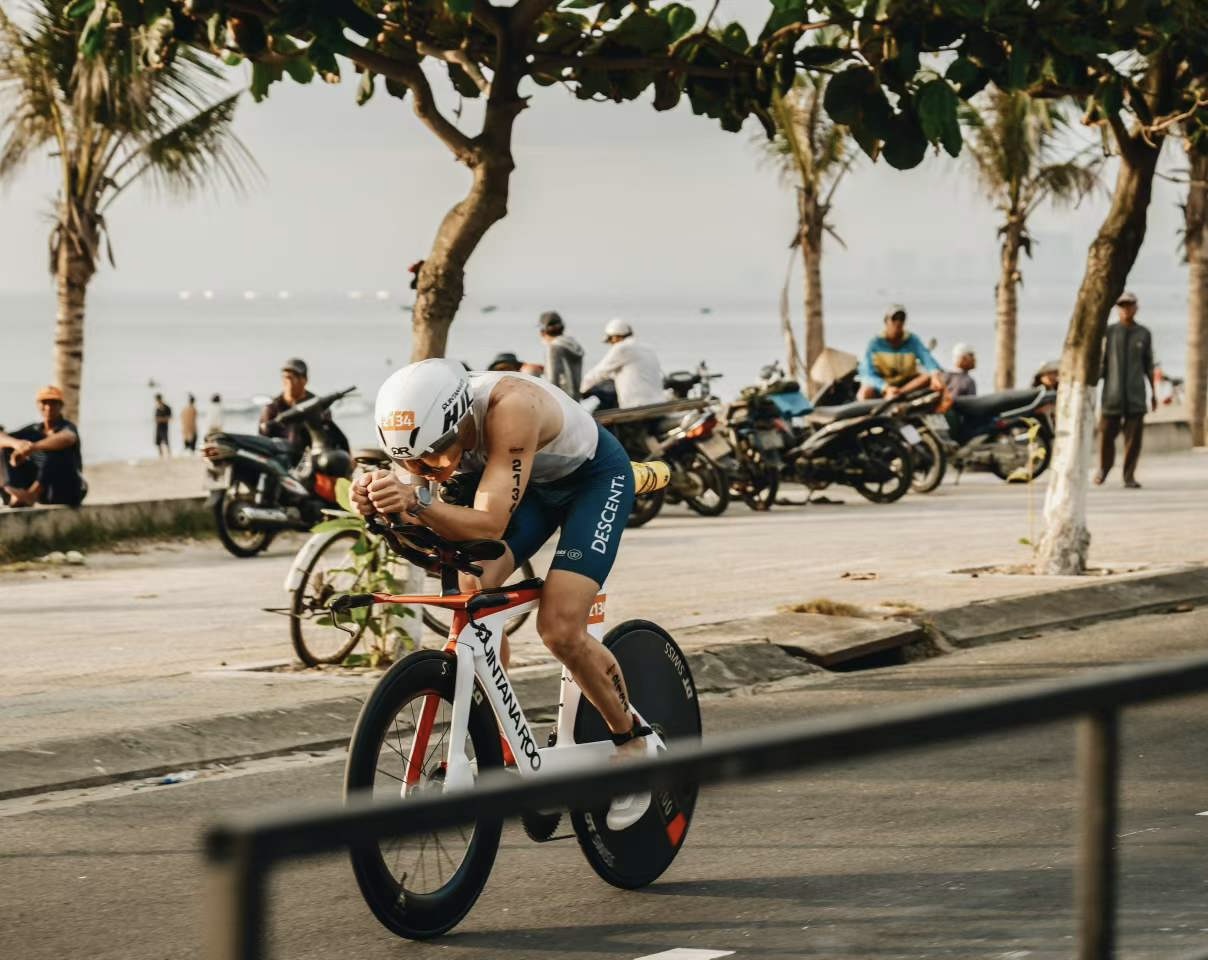
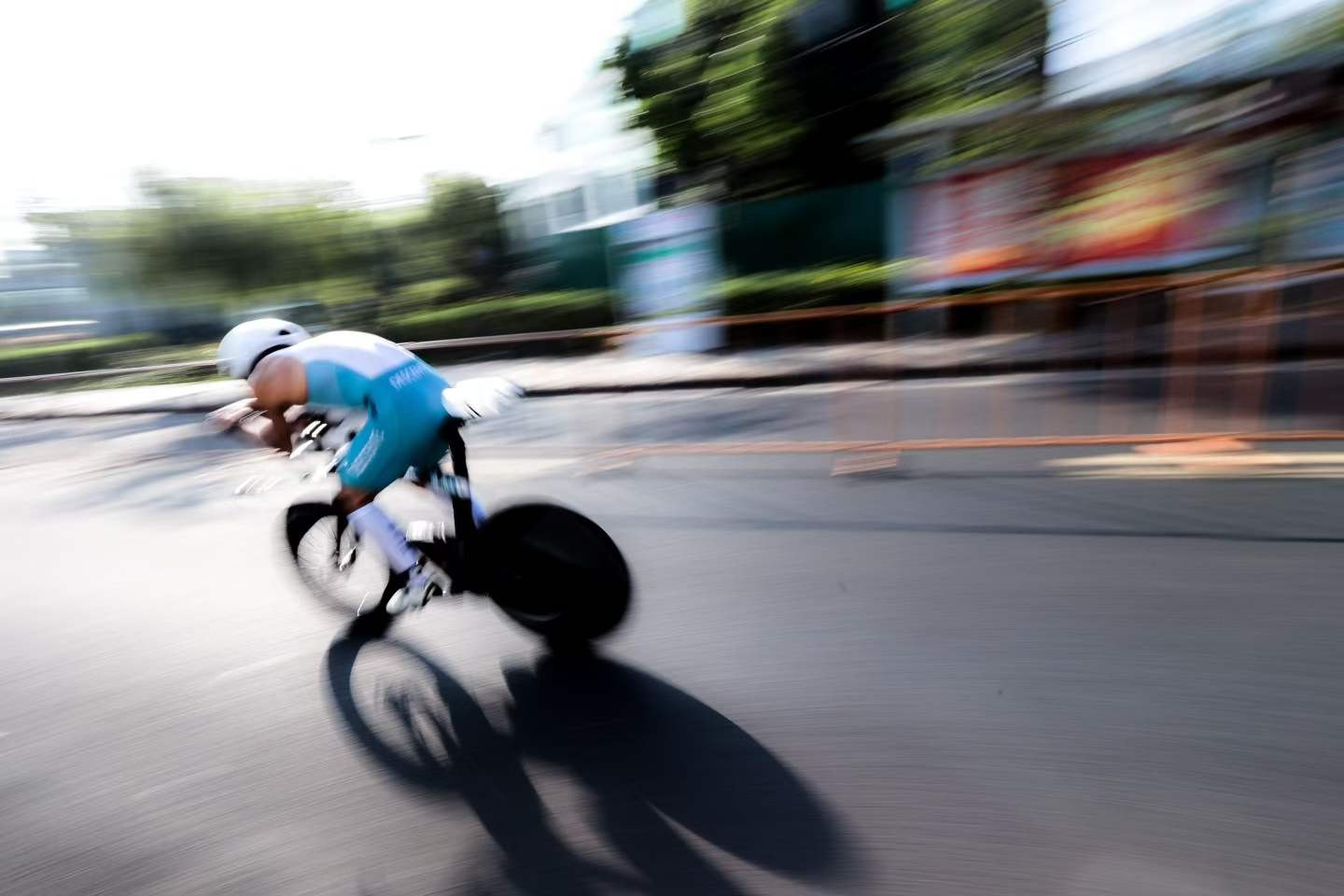
Li's bike split was the standout of the day: 90 km in 1:56:34, averaging over 46 km/h, a PR. From what I can find, he's also the first athlete from China, and maybe from all of Asia, to ride the 90 km at an IRONMAN 70.3 in under 2 hours. The previous fastest was Japan's Kenji Nener, who rode 2:00:09 at IRONMAN 70.3 Geelong in 2025.
With less than a month until Worlds, the timing on this result couldn't have been better.
I didn't race this one, and I've never raced at altitude myself. Before the race I read a lot of the research on altitude. Afterward I went through my athletes' splits and power files. It all boiled down to the four things below.
1. Get There as Early as You Can: 5 to 7 Days Is the Realistic Best
How early is early enough?
In 2007, a group of researchers at the University of Zurich in Switzerland followed 8 elite cyclists who moved up to 2,340 m, testing them on days 1, 7, 14, and 21. On day 1, maximal oxygen uptake (VO₂max) was 12.8% lower than at sea level, and time to exhaustion at 80% of their sea-level max power was down 25.8%. By day 7, they'd won back 3.2% and 6.0%. By day 14, another 4.8% and 5.7%. From day 14 to day 21, those numbers moved only 0.7% and 1.4%, too small for the researchers to call it a real change. The authors' own advice: if you're racing at around 2,340 m, get up there at least 14 days early.[1]
Fourteen days. Most of us age-groupers have jobs and families, and we have to ask for time off. Flying out two weeks early just isn't going to happen. 5 to 7 days is the best most of us can realistically get, and most of that first rebound happens in that window. If you can only get two or three days off, that's still pretty good.
Arriving early isn't only about power, either. A 2001 study from South Africa took 15 young men to 1,700 m and tested them on a shuttle run 6, 18, and 47 hours after they arrived. Performance dropped the most at 6 hours and came back some at 18 and 47 hours, but even at 47 hours it still wasn't back to sea-level form.[2]
Those were 15 teenagers doing shuttle runs, not age-groupers racing a 70.3, so you can't map the numbers straight onto us. The direction is clear, though. If you fly in the day before and race the next morning, you're lining up right when altitude hits you hardest.
2. Ride a Little More Aggressively, and Let Go of Your Run Expectations
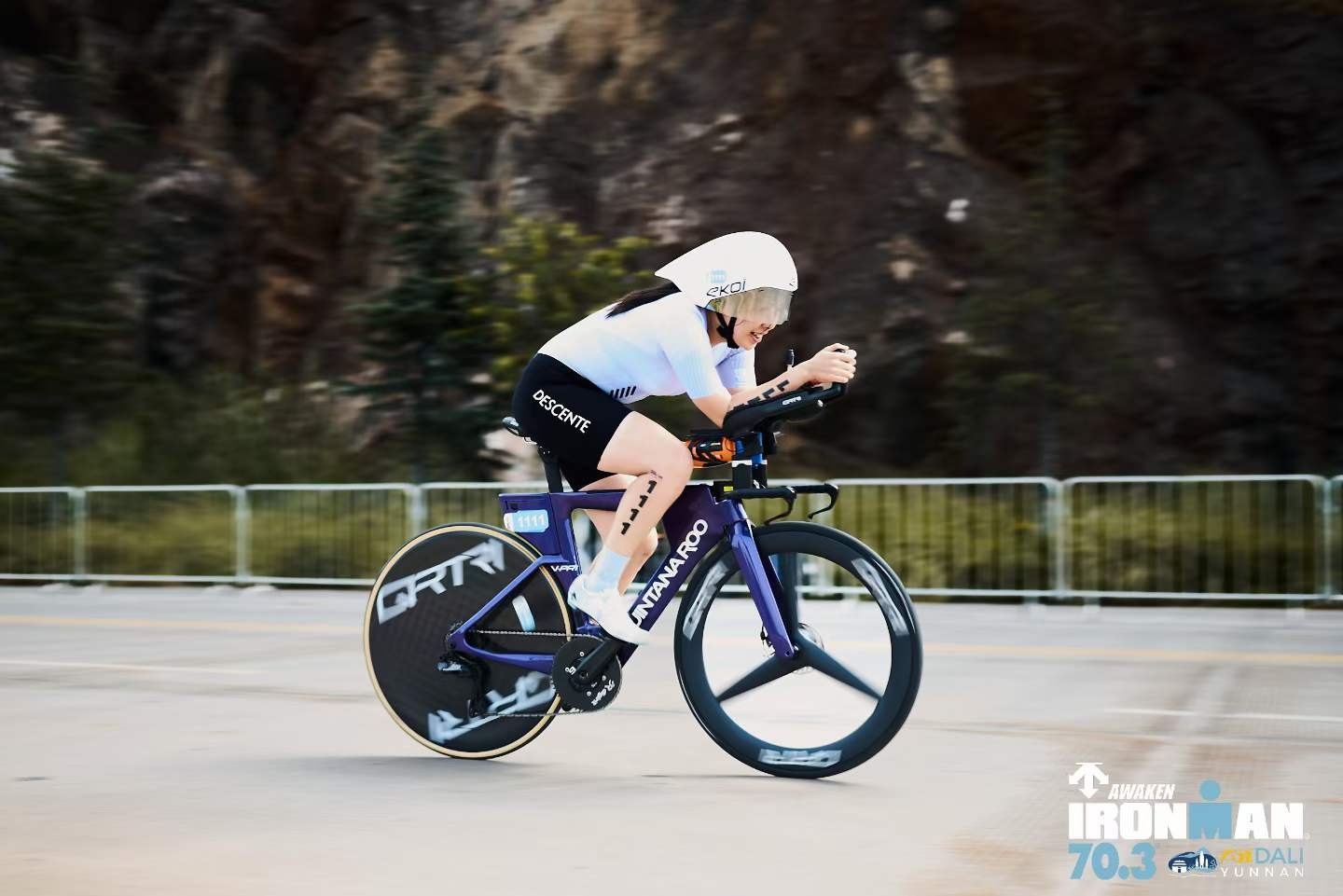
Bike splits in Dali were fast across the board, and the flat course is only half the reason.
In a 2001 review, Allan Hahn and Christopher Gore of the Australian Institute of Sport (AIS) put it plainly: go from low elevation up to moderate altitude, race on a flat course, and your cycling times actually get faster, because the drag you save outweighs the VO₂max you lose. The same paper also covered the flip side. On a course with a lot of climbing, the picture reverses, and the oxygen you lose outweighs the aero benefit.[3]
How big is the bonus? At 2,000 m the air is about 18% less dense than at sea level. Aerodynamic drag scales with air density, so the same power can get you 6 to 7% more speed. That's my own calculation using the standard atmosphere. Out on the road you also have rolling resistance and drivetrain losses, and those don't shrink, so the real gain will be a bit smaller. I broke down how drag works, and where to cut it in a normal race, in Your Aero Helmet Makes Your Head Bigger. So Why Are You Faster?
The run doesn't get that bonus. Run speeds are slow, so drag was only ever a small piece of the picture, but the thin air hits you just as hard. The fastest run split in this race was 1:20:45, and I know that athlete can run under 1:15 at sea level.
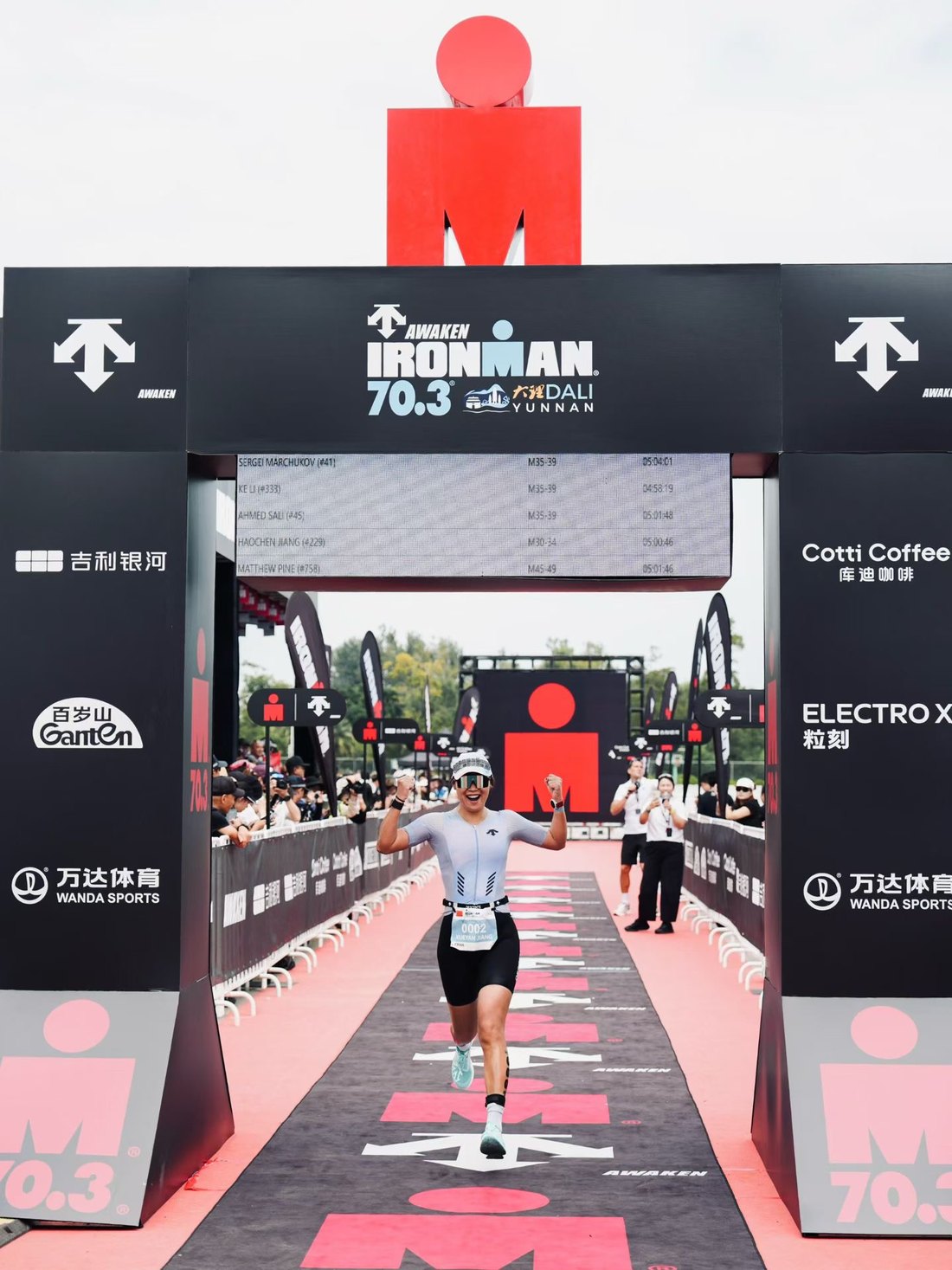
That means you can ride a bit more aggressively and open a gap first. Fast runners can't run much faster at this altitude, and the minutes you bank on the bike are minutes they won't get back.
That was exactly Li's race. He came off the bike 8 minutes ahead of second place, and all he had to do on the run was hold it.
3. Cut Your Bike Power 5 to 8% for Altitude
At 2,000 m, the race plans I write for my athletes cut target power by 5 to 8%. They ride once or twice after they arrive, then fine-tune on race day by feel and breathing.
Where does that number come from? In 2007, the Australian Institute of Sport had 10 well-trained cyclists and triathletes do 5-minute all-out time trials at simulated altitude. Compared with 200 m, average power dropped 5.8% at 1,200 m, 10.3% at 2,200 m, and 19.8% at 3,200 m. VO₂max at those same three altitudes dropped 8.2%, 13.9%, and 22.5%. Gross efficiency on the pedals during the 5-minute TT didn't differ across the four altitudes. What drops is the oxygen you can use.[4]
I use 5 to 8% instead of copying the 10.3% for two reasons. That number came from a 5-minute all-out effort, and the bike leg of a 70.3 is far less intense. And at the same altitude, one athlete might lose 6% while another loses 15%. The percentage is only a starting point for the race plan. In the end it comes down to how that athlete actually responds once they're up there.
All of this assumes the power baseline you're cutting from was accurate to begin with. I covered that in Why You Need to Retest Your FTP Regularly, so I won't repeat it here.
4. In Dry Heat, Pour Water on Yourself. In Humid Heat, Cool From the Inside
The high in Dali on race day was about 25°C. Not a scary number, but with direct sun and low humidity, my athletes described it as classic dry heat.
The most important thing to do in dry heat is douse yourself. A 2024 study had 13 trained runners do a 10 km time trial at 30.4°C and 47.4% relative humidity. One group poured water on themselves along the way, and one group didn't. The dousing group ran 27 seconds faster, their average skin temperature was 1.8°C lower, they felt a lot better, and their sweat rate was 0.37 liters an hour lower.[5]
One thing didn't move at all: core temperature was the same in both groups. The authors concluded that the 27 seconds came from feeling better once skin temperature dropped. Dousing didn't actually pull heat out of the core.
Keep dousing, but know what it's doing for you. You feel less hot, and you save that 0.37 L of sweat. You lose water fast in dry heat anyway, so that 0.37 L is fluid you get to keep. Whether you can hold pace late in the run depends on how you feel more than most people think.
That study was done at 47.4% humidity, a bit more humid than Dali. The drier the air, the faster water evaporates off your skin, so in conditions like Dali's the effect should only be better. For now that's just my own inference. The study didn't test anything drier.
In the humid heat of a Taiwanese summer, this approach doesn't work as well. When humidity is high, sweat can't evaporate in the first place, and pouring more water on yourself only carries off so much heat. A 2023 study from Singapore made exactly that comparison. 8 men cycled to exhaustion in two conditions: 34.7°C at 38% humidity and 34.8°C at 80% humidity. Compared with drinking warm water, drinking an ice slurry let them last 76.5% longer at 80% humidity and 21.3% longer at 38% humidity.[6]
That's 8 people, and the differences between individuals were huge. For both percentages, the spread from rider to rider was bigger than the average itself. You can trust the direction. Don't count on those multiples being what you'll get on race day.
In humid heat, you need to cool from the inside: iced drinks, ice slurry. If there's ice water to pour on yourself, great. If it's lukewarm, skip it when you can.
One more thing. To check whether your heat acclimation is working, look at core temperature and your heart rate on the same workout. Skin temperature won't help you there. Race day is a different story. When your skin temperature drops, you feel a little better, and how you feel directly affects whether you dare to hold your pace. Same measure, different job in each setting.
In dry heat you lose water fast, and if your fueling rhythm falls apart along with it, other problems are waiting for you later in the race. I covered cramping in Are Race Cramps Really About Electrolytes?
Congrats to Li Pengcheng and Cao Junyu. Next stop: Kona.
On paper, Dali was a great place to post a fast time. What it really did was ask everyone a question first. Thin air is a bonus on the bike and a cost on the run, so where are you going to place your bet?
Editor's note: Altitude sickness symptoms (persistent headache, nausea and vomiting, trouble sleeping, unsteady walking, breathlessness even at rest) are most common in the first two days after you arrive at altitude. If symptoms don't improve or keep getting worse, the most effective treatment is to get down to a lower altitude and seek medical help. Don't try to tough it out.
References:
- Schuler, B., Thomsen, J. J., Gassmann, M., & Lundby, C. (2007). Timing the arrival at 2340 m altitude for aerobic performance. Scandinavian Journal of Medicine & Science in Sports, 17(5), 588–594. https://doi.org/10.1111/j.1600-0838.2006.00611.x
- Weston, A. R., Mackenzie, G., Tufts, M. A., & Mars, M. (2001). Optimal time of arrival for performance at moderate altitude (1700 m). Medicine & Science in Sports & Exercise, 33(2), 298–302. https://doi.org/10.1097/00005768-200102000-00020
- Hahn, A. G., & Gore, C. J. (2001). The effect of altitude on cycling performance: a challenge to traditional concepts. Sports Medicine, 31(7), 533–557. https://doi.org/10.2165/00007256-200131070-00008
- Clark, S. A., Bourdon, P. C., Schmidt, W., Singh, B., Cable, G., Onus, K. J., Woolford, S. M., Stanef, T., Gore, C. J., & Aughey, R. J. (2007). The effect of acute simulated moderate altitude on power, performance and pacing strategies in well-trained cyclists. European Journal of Applied Physiology, 102(1), 45–55. https://doi.org/10.1007/s00421-007-0554-0
- Anderson, M., Bellenger, C., Chaseling, G. K., & Chalmers, S. (2024). The Effect of Water Dousing on Heat Strain and Performance During Endurance Running in the Heat. International Journal of Sports Physiology and Performance, 19(11), 1291–1298. https://doi.org/10.1123/ijspp.2024-0044
- Choo, H. C., Choo, D. H. W., Tan, I., Chang, J., Chow, K. M., Lee, J. K. W., Burns, S. F., & Ihsan, M. (2023). Effect of ice slurry ingestion on thermoregulatory responses during fixed-intensity cycling in humid and dry heat. European Journal of Applied Physiology. https://doi.org/10.1007/s00421-023-05235-y