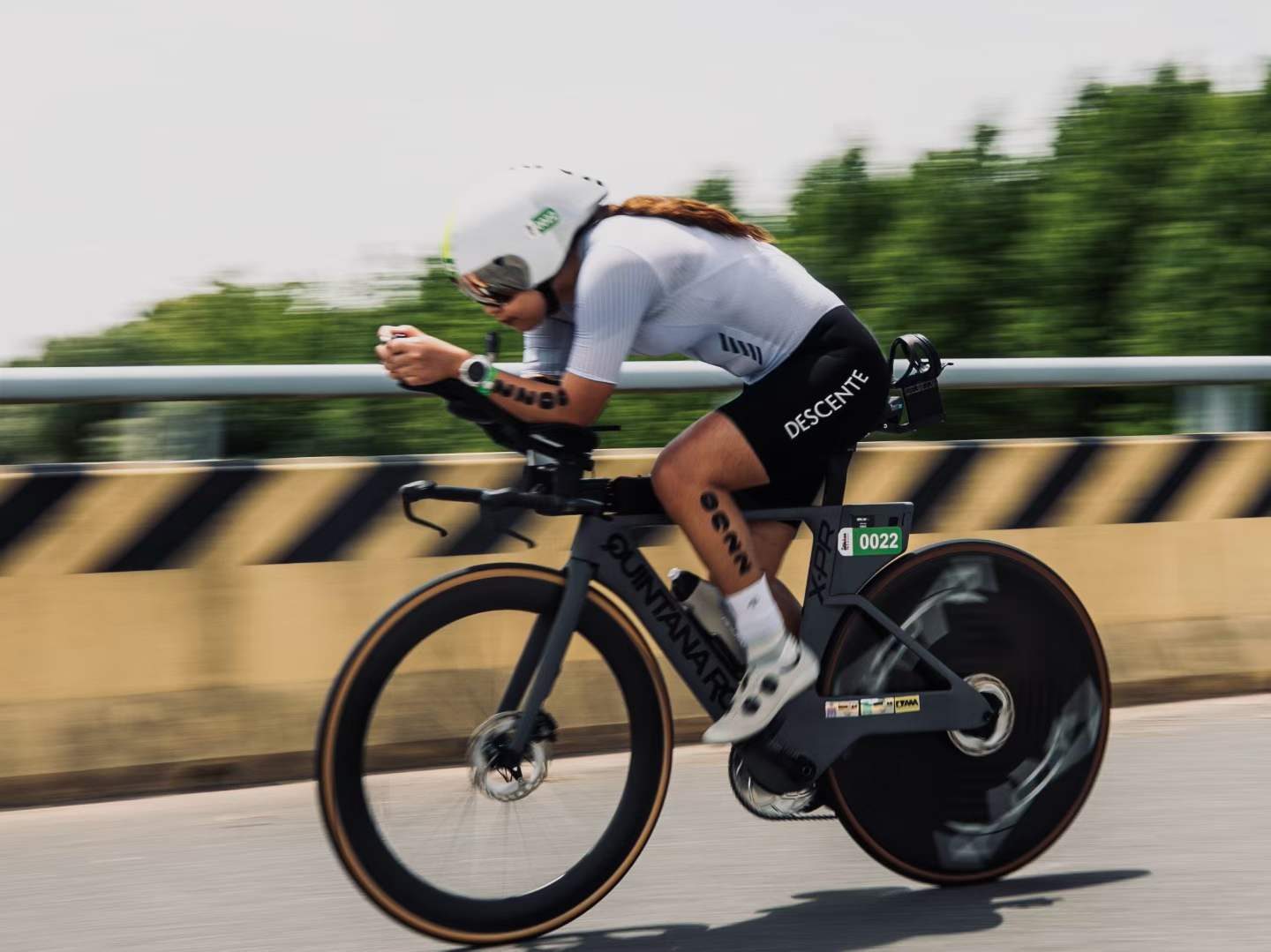

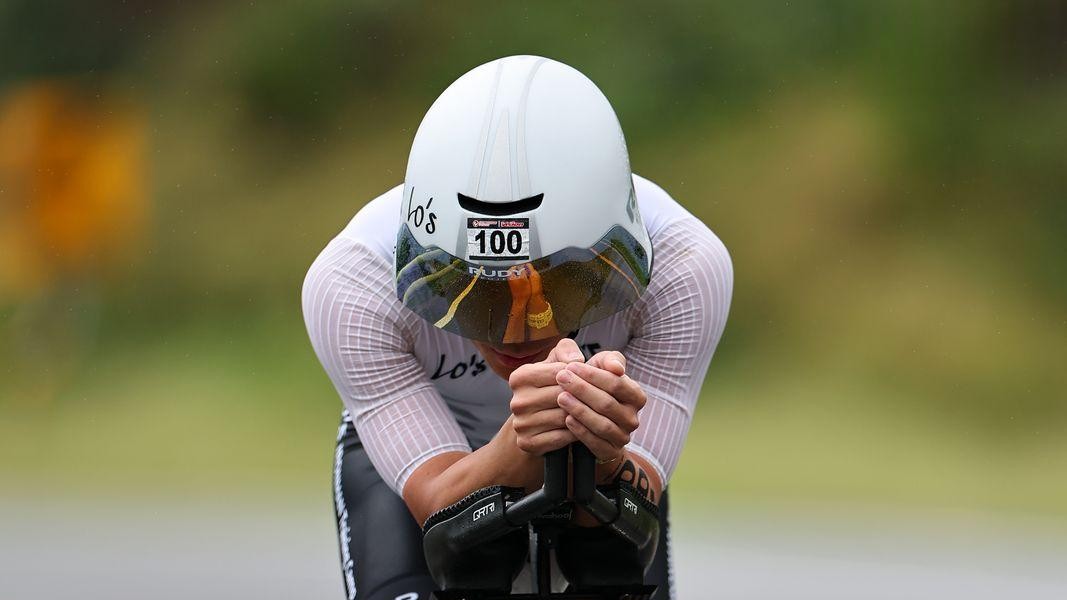
Every year before race season, the gear marketing ramps up. This helmet claims it saves a few watts. That wheelset claims a few more. Skinsuits, bottle cages, even socks come with a number of their own. Add them all up and it looks like you'd save several minutes over a 180 km bike. Then you actually buy it all, and your results barely move.
Which purchase actually makes you faster, then?
That one's not hard to work out. The answer is hiding in three letters: CdA.
1. What Is CdA?
CdA is short for coefficient of drag area. When someone who's been in a wind tunnel tells you they're a 0.231 or a 0.2175, this is the number they mean. Lower means less effort at the same speed.
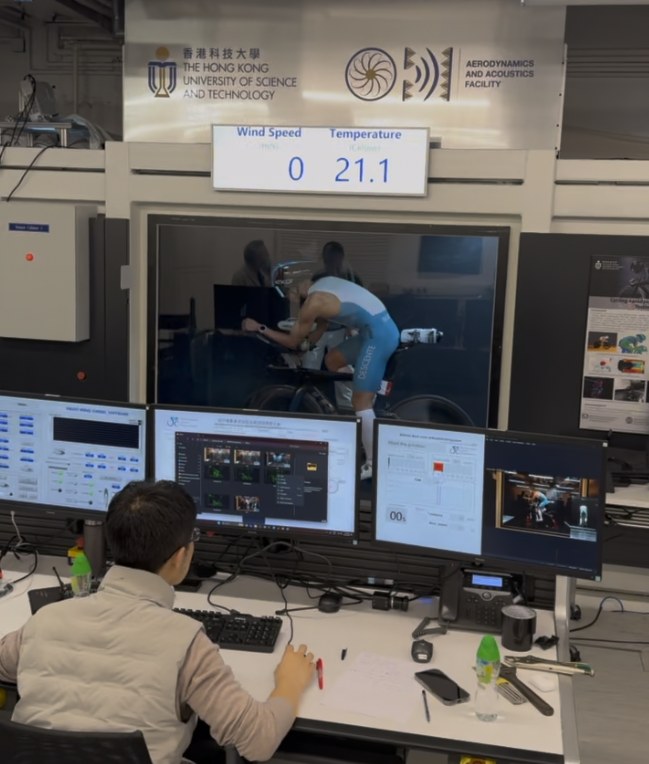
It's two numbers multiplied together: the coefficient of drag (Cd) and frontal area (A).
Cd is about how smoothly air flows around an object. A is how big a surface you and your bike present to the wind, head-on.
Those two work independently, which leaves only two moves you can make: change your shape so the air gets past more smoothly, or make yourself smaller. Whatever gear you swap and whatever position change you make, if it doesn't change one of those two, it won't make you faster.
2. Route One: Get the Air Flowing Smoothly
A golf ball shows it best.
Hit a smooth ball with no dimples, and the air peels off the surface once it reaches the widest part of the ball, leaving a big mass of turbulence trailing behind. That turbulence is a low-pressure zone, and it pulls the ball backward. This is called pressure drag. A smooth ball has a Cd of about 0.5.
The dimples stir up the thin layer of air hugging the ball's surface. Once that air is turbulent, it actually clings better. The point where it separates moves farther back, and the low-pressure zone behind the ball shrinks. There's a term for this: tripping the boundary layer.
Dimples are a workaround. A ball is round and you can't change its shape, so all you can do is work on the surface and get the air to leave a little later.
If you can change the shape, there's a more direct fix. Stretch out the back, taper it, and let the cross-section narrow gradually so the air never has to break away all at once. That's what aero frames, wheels, and helmets do. Same goal as dimples, pushing Cd down, different method: dimples change the surface, aero shapes change the shape itself. Manufacturers have gotten better and better at this. In triathlon and road racing alike, average speeds keep going up year after year, and equipment has a lot to do with it.
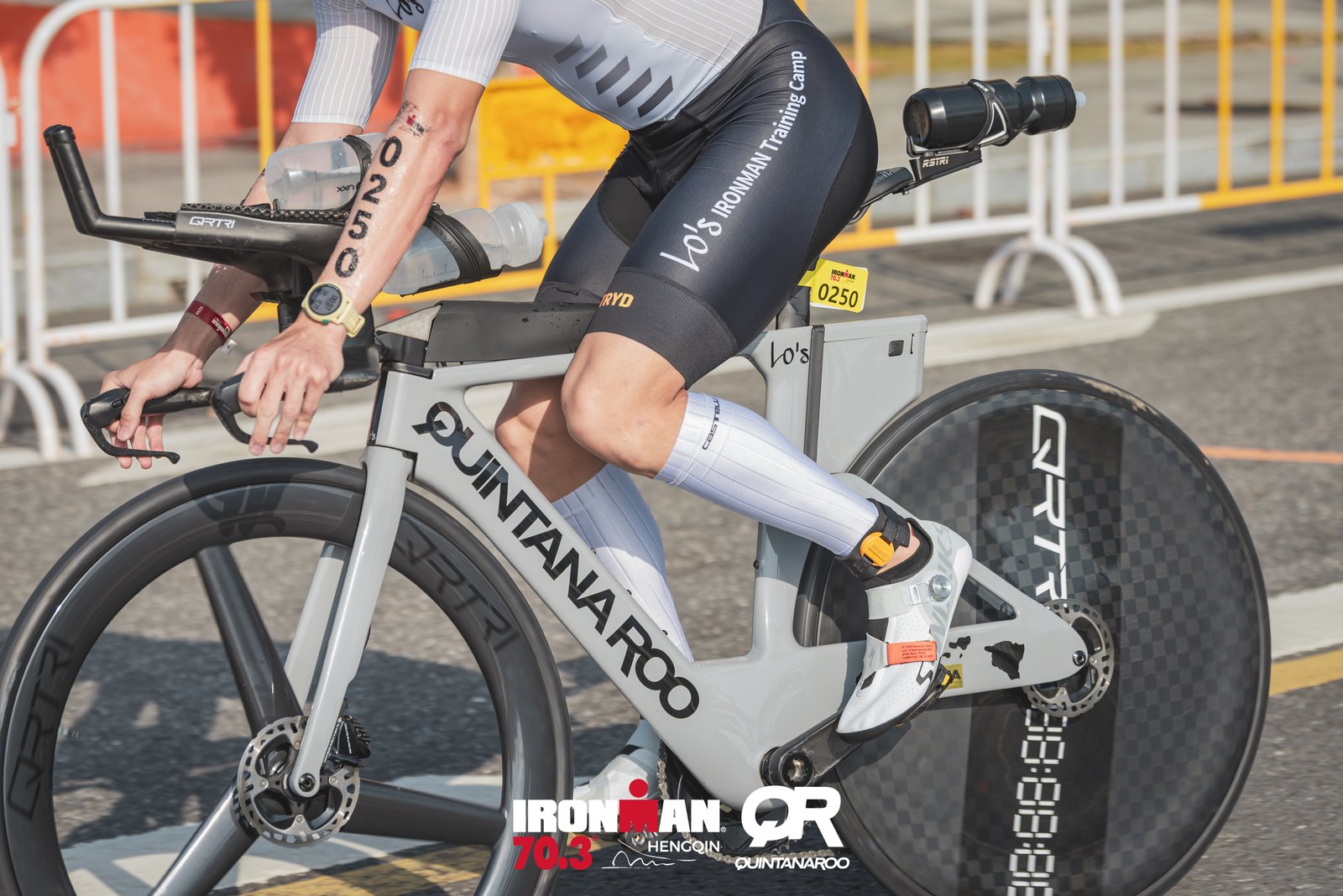
The hard part is the person riding the bike.
The human body is a bunch of cylinders: two arms, two thighs, a head, a torso. The air has to separate at the widest point of every one of them, and the wake they leave behind is much bigger than a golf ball's. The textured patterns on skinsuits, tri suits, and calf sleeves do the same thing dimples do. They add a little friction drag to get rid of much costlier pressure drag. You're just picking the lesser of two evils.
3. Route Two: Make Yourself Smaller
Your bike, your wheels, and your helmet put together aren't your biggest opponent.
Of all the air you have to push through on the bike, roughly 80% is blocked by your body. The bike accounts for only 20%.
That's why getting down on the aerobars matters. Tucking your chest in so the air flows a bit more smoothly is just a side effect. What it mainly does is cut a big chunk out of your frontal area.
Plenty of people have said "fix your position first, then buy gear." That 80% is the real reason why. You can buy the best frame, wheels, helmet, and suit money can buy, and you're still only working inside that 20%.

Follow that logic and the lower your position and the smaller your area, the faster you go. In practice, it isn't that simple.
Faulkner and Jobling (2020) brought in 11 trained cyclists and compared several different time trial positions.[1] With the hip angle closed down to 12° (the most aggressive group), the riders' threshold power dropped 16 watts compared with their self-selected position. But when power, CdA, and oxygen consumption went into one equation to get aerodynamic-physiological economy, that angle came out best. You can read that number as "how much speed you get for the same effort." Higher is a better deal, and the 12° group was the highest of the three angles.
The same move does two things at once. Your area gets smaller, and so does the power you can put out. What you're looking for is the point where one divided by the other comes out highest, not the point with the lowest CdA.
Even the authors only take their conclusion as far as short time trials. Husband (2024) screened 16,578 papers down to 47 studies on bike fitting (saddle height, torso angle, crank length, and other settings all count) and ran them through an NIH quality assessment tool. Not one rated good. Five rated fair and 33 rated poor.[2] More important, most of these tests run for a few dozen minutes in a lab and stop. Nobody has tested yet how much power drops after more than three hours in a low position. And for us, the bike leg of a full distance (226 km) often runs five or six hours.
For triathletes, those 16 watts aren't really the thing to watch most. What you really need to look after is comfort, and your ability to hold power for a long time. Four or five hours into the ride, can you still stay down in that position? Is it going to cost you on the 42 km run once you're off the bike? If the most economical angle in the lab has your lower back aching after forty minutes and your legs stiff when you start running, it's the wrong angle for you.
4. Back to That Helmet
An aero helmet clearly makes your head bigger. A really does go up. But it also pushes Cd down, and CdA is those two numbers multiplied together. It comes down to which side wins. If what you save on Cd outweighs what you add in A, your CdA ends up lower than without the helmet, and however much lower it is, that's how much faster you are. A helmet that can't make up the difference is only doing its safety job.
Run the same equation on clothing. Put on any jersey or suit and your area goes up. The Fast or Fiction testing team has said they've seen a jersey increase a rider's drag in testing, and seen two layers of aero clothing come out slower. The extra area is one reason. The other is that layering ruins the effect the textured fabric was counting on to trip the boundary layer.
5. Position or Gear: Which Do You Change First?
Get your position to something you can hold for the whole race first. Then talk about what to buy. Eighty percent of your drag is you, so that's where the big gains are. However good the gear you buy, it can only move the other 20%.
Once your position is set, test your gear again. A lot of people miss this step. The same helmet or skinsuit that worked in your old position might not work in the new one, and might even make things worse. Do it in the reverse order and the money you spent up front is wasted.
To judge any piece of gear, ask two questions: Is it helping the air flow more smoothly, or is it making me smaller?
And don't judge a position on CdA alone. At the very least, pull up your power from the back half of your long rides and compare. When you can't hold the aero position anymore and your power starts sliding, you know it right then. What you can't judge in the moment is whether the trade was worth it: whether the drag you saved makes up for the watts you lost and for the 42 km still to come. You can only answer that by going back through the files afterward.
I've been building a tool to handle this. It used to be that if you wanted to know your CdA, you either paid a lot for wind tunnel time or bought a pricey on-bike sensor setup. My approach works backward from the power and speed files you already upload to estimate your CdA. It costs a lot less, and you can save every result and watch the trend. Did the position changes and gear swaps you made this year actually save more than last year? You don't have to guess by feel anymore.
It also uses CdA to build your race plan. Put your FTP, the course data, and race-day weather into the same equation with your CdA, and it calculates how many watts to ride on the bike and what bike split that gets you. It's all set before the start, so you're not guessing halfway through the ride.
It's still in testing, and it has limits: you have to pick the right stretch of road, and the wind can't be too gusty. Once it's stable, I'll write it up with real cases.
If you race hilly courses with a lot of climbing, or you spend most of your race time under 30 km/h, you can throw out the order above entirely and work on power and body weight first. Aero only pays off once you're going fast enough.
So the next time you see gear advertised as saving a few watts, first ask whether it's helping the air flow more smoothly or making you smaller. If it can't answer either question, those watts won't show up in your results.
References:
- Faulkner, S. H., & Jobling, P. (2020). The Effect of Upper-Body Positioning on the Aerodynamic-Physiological Economy of Time-Trial Cycling. International Journal of Sports Physiology and Performance, 16(1), 51–58. https://doi.org/10.1123/ijspp.2019-0547
- Husband, S. P., Wainwright, B., Wilson, F., Crump, D., Mockler, D., Carragher, P., Nugent, F., & Simms, C. K. (2024). Cycling position optimisation – a systematic review of the impact of positional changes on biomechanical and physiological factors in cycling. Journal of Sports Sciences, 42(15), 1477–1490. https://doi.org/10.1080/02640414.2024.2394752