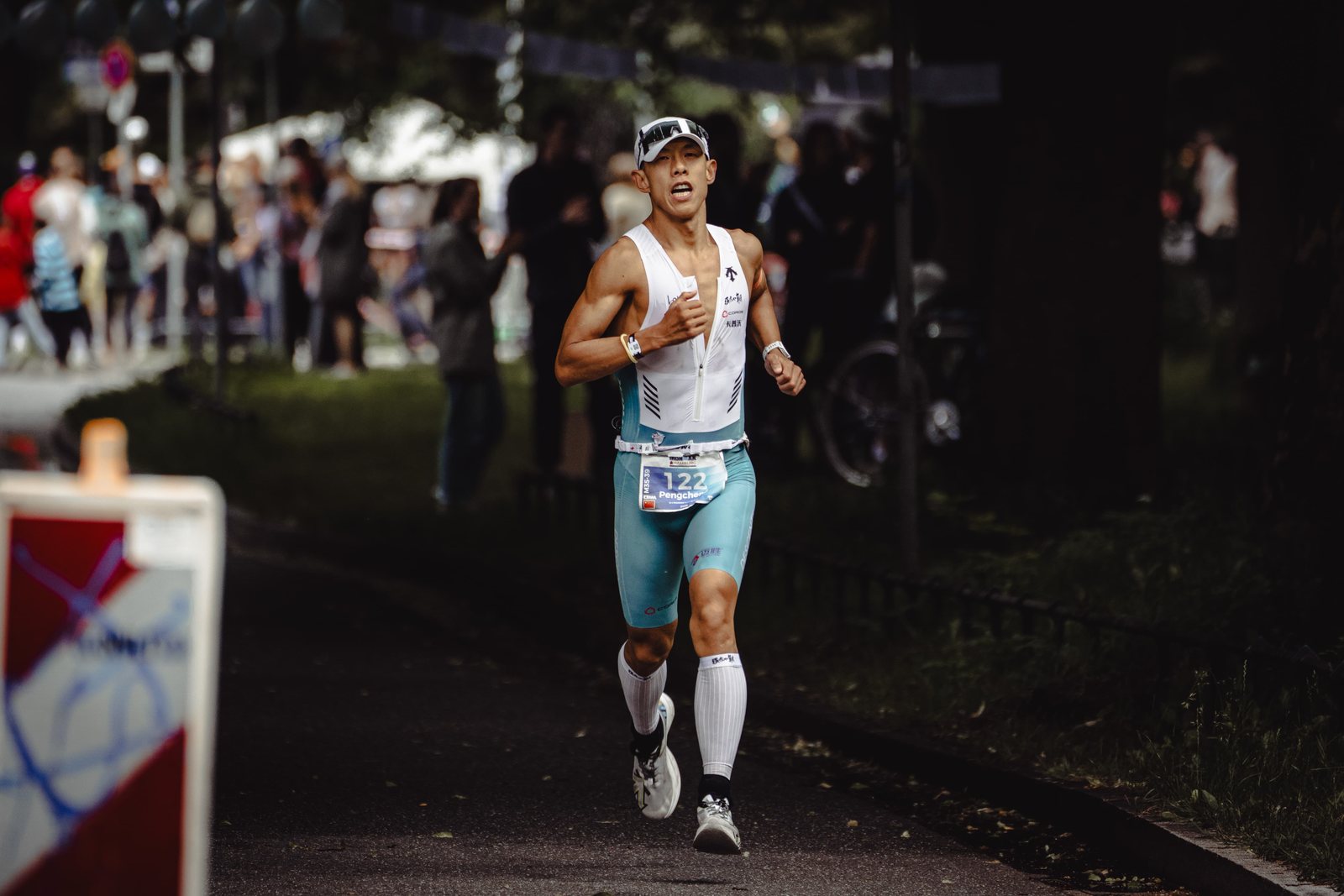

Cramping might be the most common problem in endurance sports, and the hardest one to give a straight answer on.
Not drinking enough, too little sodium, not enough training, going out too hard. Every theory has its believers, and every one has counterexamples. I've been coaching for a lot of years, and on this one I can still only talk in probabilities. I can't give you a guarantee.
The textbook version I see in my own athletes goes like this. They come out of T2, and around 8 or 9 km the calf suddenly locks up. They stop, stretch it out, get going again, make it another 3 km, and it cramps again. The second time, it doesn't come back. The first thing they text me after the race is almost always the same: "Coach, did I not take in enough electrolytes?"
This year, a new dataset took a fresh look at cramping: medical tent records from the IRONMAN World Championship in Kona from 1989 to 2019. Thirty years, 49,530 athletes.[1]
1. Why This Dataset Carries Weight
It covers 10,533 medical records from 49,530 athletes, spanning 1989 to 2019. All of it is clinical data written down by doctors in the race medical tent on the spot, including blood draws, body weight measurements, and clinical diagnoses. None of it comes from questionnaires athletes filled out from memory after the race.
Exercise-associated muscle cramps (EAMC) added up to 2,863 cases over those 30 years, an average of 57.8 for every 1,000 athletes.
In this paper, the "non-cramp group" isn't the whole field. It's the 7,670 people who also went into the medical tent, but for something other than cramps. Both groups had a problem that day. The only difference is whether that problem was cramping. Every comparison below has to be read with that in mind.
2. Medical Tent Visits Dropped 80% in 30 Years
In 1989, 12.8% of athletes ended up in the medical tent with cramps. By 2019 it was just 2.6%.
The research team points to better fueling education and race strategy as the main reasons. That's their interpretation. The data itself only shows the trend. Too much changed over 30 years: the size of the race, the medical tent's admission criteria, the caliber of the athletes.
Keep in mind that 2.6% isn't the rate of cramping. It's the rate of cramps bad enough to land someone in the medical tent.
Another study handed out a questionnaire before an IRONMAN and asked athletes, "Have you ever cramped in a race?" Of 433 people, 216 said yes, close to half.[3] The two numbers are so far apart because most people who cramp just stretch it out, slow down, and get themselves to the finish. Their names never make it into the medical tent's records.
All this dataset can capture is the small group with the most severe cramps.
3. On Dehydration, the Results Point the Other Way
The cramp group lost noticeably more body weight than the non-cramp group. Weight loss is the most common marker of dehydration, so in this dataset, dehydration and cramping really are linked.
That runs opposite to another study that's been cited over and over for more than a decade. In 2011, Martin Schwellnus's team at the University of Cape Town ran a prospective study at IRONMAN South Africa: 210 athletes, 43 of whom cramped. Blood electrolyte concentrations before and after the race, and changes in body weight, showed no difference between the two groups. What actually predicted cramping was race pace and a history of cramping.[2]
The Kona research team pointed out this contradiction themselves, right in their abstract. Nobody has tested why the two don't line up yet. My own guess is scale: one is 30 years and 2,863 cases, the other is one year and 210 people.
You can use the direction, but you can't read cause and effect into it. This is a retrospective analysis, so what it measured is an association: the people who cramped that day also lost more weight. Dehydration looks more like something that shows up alongside cramping. This data can't support the claim that it's the switch that sets cramps off.
4. Blood Sodium and Potassium: Almost No Difference
Blood sodium and potassium concentrations didn't differ between the cramp and non-cramp groups, and there was no link between low blood sodium and cramping.
Don't read that as "electrolytes don't matter," though. When you lose a lot of sodium in sweat, your body pulls it in from elsewhere to protect the concentration in your blood first, because that's life or death. Physiology has known this for a long time, and this paper didn't measure it. Your blood test can come back normal while the muscle that's cramping is locally short on sodium.
So this study proves only one thing: a blood sodium test can't detect your cramp risk. That's a long way from "taking in sodium is pointless." It's the same point I made in my TrainingPeaks article. Data covers the half you can quantify.
5. The Athletes Who Cramp Tend to Be the Ones Pushing Hardest
The cramp group finished faster and showed up at the medical tent earlier.
That fits the hypothesis with the most support right now, altered neuromuscular control: once fatigue builds past a certain point, your nervous system's control over the muscle starts to go wrong. Schwellnus's finding that faster race pace means more cramping points to the same thing.
Dehydration and fatigue don't compete as explanations. They're very likely both happening out on the course. A muscle that's dehydrated and fatigued will probably hit the point of losing control sooner than one that's only fatigued. This paper didn't test how the two interact, so for now that's just my experience talking. There's no research behind it yet.
Men and women cramped at the same rate. The other problems that showed up on the same medical records as cramps were exhaustion, low blood pressure, abdominal pain, and headache, and the most common treatment was IV fluids. Cramps rarely happen alone. They're usually one signal of stress across your whole body, which reaches well beyond that one leg.
6. Back to That 2.4×
In this dataset, one thing predicted whether someone would cramp again better than anything else: they'd already cramped once in this race.
Athletes who'd already been to the medical tent once for cramps were 2.4 times as likely to come back with cramps in the same race as athletes who hadn't made that first visit. Of the 2,800-plus cramp cases, 377 people came back a second time.[4] Blood sodium had no predictive power like that, and neither did how much weight they'd lost.
It's the same story from race to race. That 433-person survey found that athletes with a history of cramping had faster race times, plus two other traits: family members who also cramp easily, and past tendon or ligament injuries.[3] Part of cramping is something you bring with you to the start line, and what you take in on the day, or how much, can't cancel all of it out.
Physiologically, that makes sense. The conditions that made you cramp, whether fatigue, dehydration, or both, don't go away because you cramped once. The race keeps going, and they only get worse.
After your first cramp in a race, drop the idea that you'll be fine if you just push through. Your risk for the rest of the day is already higher. Do these four things, in order:
- Back off. Stretching and then going right back to the same pace won't work. Drop your target power or pace one notch for the next 10 to 15 minutes, on purpose.
- Get your fueling back on track. Think back over the last hour. How much did you drink? How much sodium did you take in? Most people skipped that hour before the cramp, so make it up now. Don't wait for the next aid station. I go deeper into amounts and ratios in my high-carb fueling article.
- Reset today's goal. The first cramp is a signal: today's pace is beyond what you can hold right now. Change the goal from "hit my target time" to "finish without cramping a second time."
- Write it down after the race. Temperature, your pace range, which kilometer you cramped at, which muscle, how much you took in during the hour before. After three to five races, your own pattern will start to show, and that's more relevant to you than any study of a group.
7. What This Study Can't Measure
It can't measure each athlete's actual sweat sodium concentration, total sodium loss, actual intake, or sweat rate. Those happen to be exactly the things that decide your personal cramp risk. It also only captures people who walked into the medical tent. The much bigger group who got themselves to the finish isn't in there.
Thirty years of data can answer questions about patterns across a group. It can't write you a personal prescription. The temperature and intensity where you start to cramp is something you have to piece together race by race from your own training and race records. Other people's data can't do that for you.
8. I Know How Hard It Is to Back Off
You're 130 km into the bike, and the numbers on your head unit still look good. Backing off on purpose right then means admitting that today's goal is coming down. When it's me out on the course, my first thought is the same as yours: hang on another kilometer and see.
But the price of a second cramp is usually your whole run falling apart. That costs a lot more than 30 seconds.
On cramping, I can still only talk in probabilities. The difference is that after the first one, you still get a say in which way those odds go.
References:
- Nilssen, P. K., Johnson, K. B., Hiller, W. D. B., Miller, T. K., & Connolly, C. P. (2026). Exercise-Associated Muscle Cramps in Ironman-Distance Triathletes Over 3 Decades. Clinical Journal of Sport Medicine, 36(1), 30–35. https://doi.org/10.1097/JSM.0000000000001276
- Schwellnus, M. P., Drew, N., & Collins, M. (2011). Increased running speed and previous cramps rather than dehydration or serum sodium changes predict exercise-associated muscle cramping: a prospective cohort study in 210 Ironman triathletes. British Journal of Sports Medicine, 45(8), 650–656. https://doi.org/10.1136/bjsm.2010.078535
- Shang, G., Collins, M., & Schwellnus, M. P. (2011). Factors associated with a self-reported history of exercise-associated muscle cramps in Ironman triathletes: a case-control study. Clinical Journal of Sport Medicine, 21(3), 204–210. https://doi.org/10.1097/JSM.0b013e31820bcbfd
- Johnson, K., Connolly, C., Nilssen, P., Miller, T., & Hiller, W. D. (2022). Classification of exercise-associated muscle cramps in Ironman-distance triathletes over three decades. International Journal of Exercise Science: Conference Proceedings, 8(10), Article 44.
Editor's note: This article is general training education. If you become confused, can't stand up, keep vomiting, or have an abnormal body temperature during a race, get help from the race medical team right away. Don't try to handle it yourself.