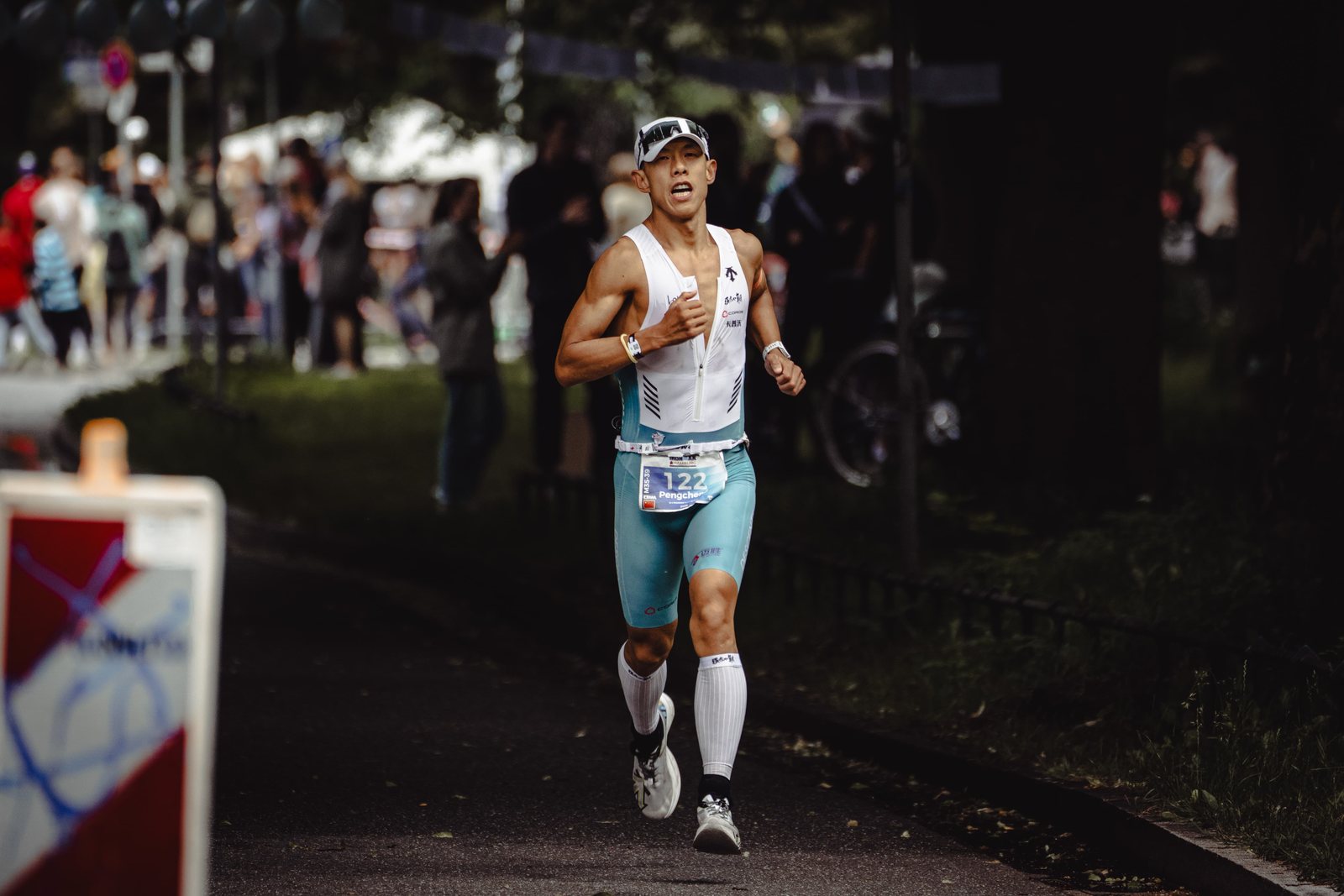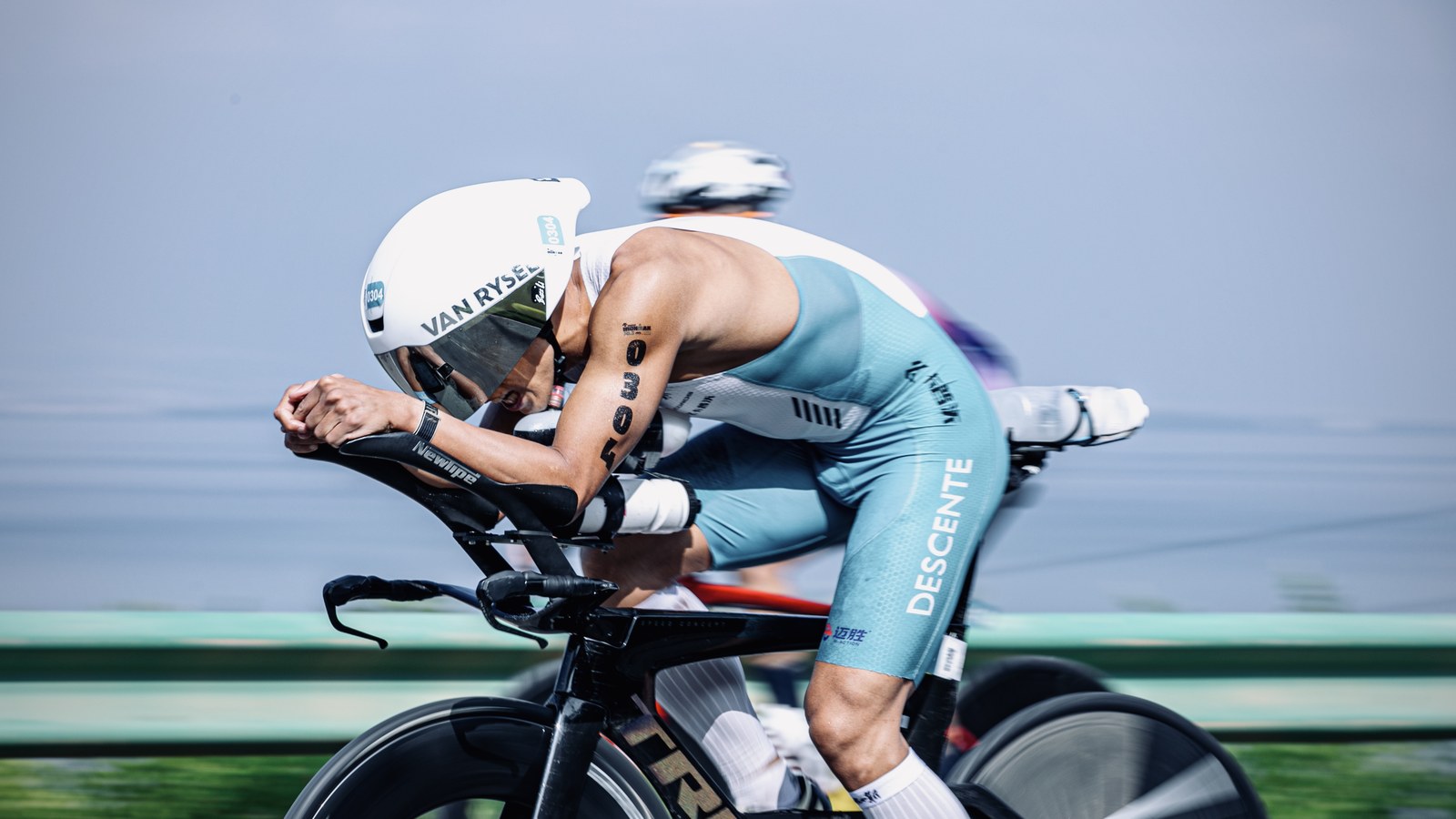
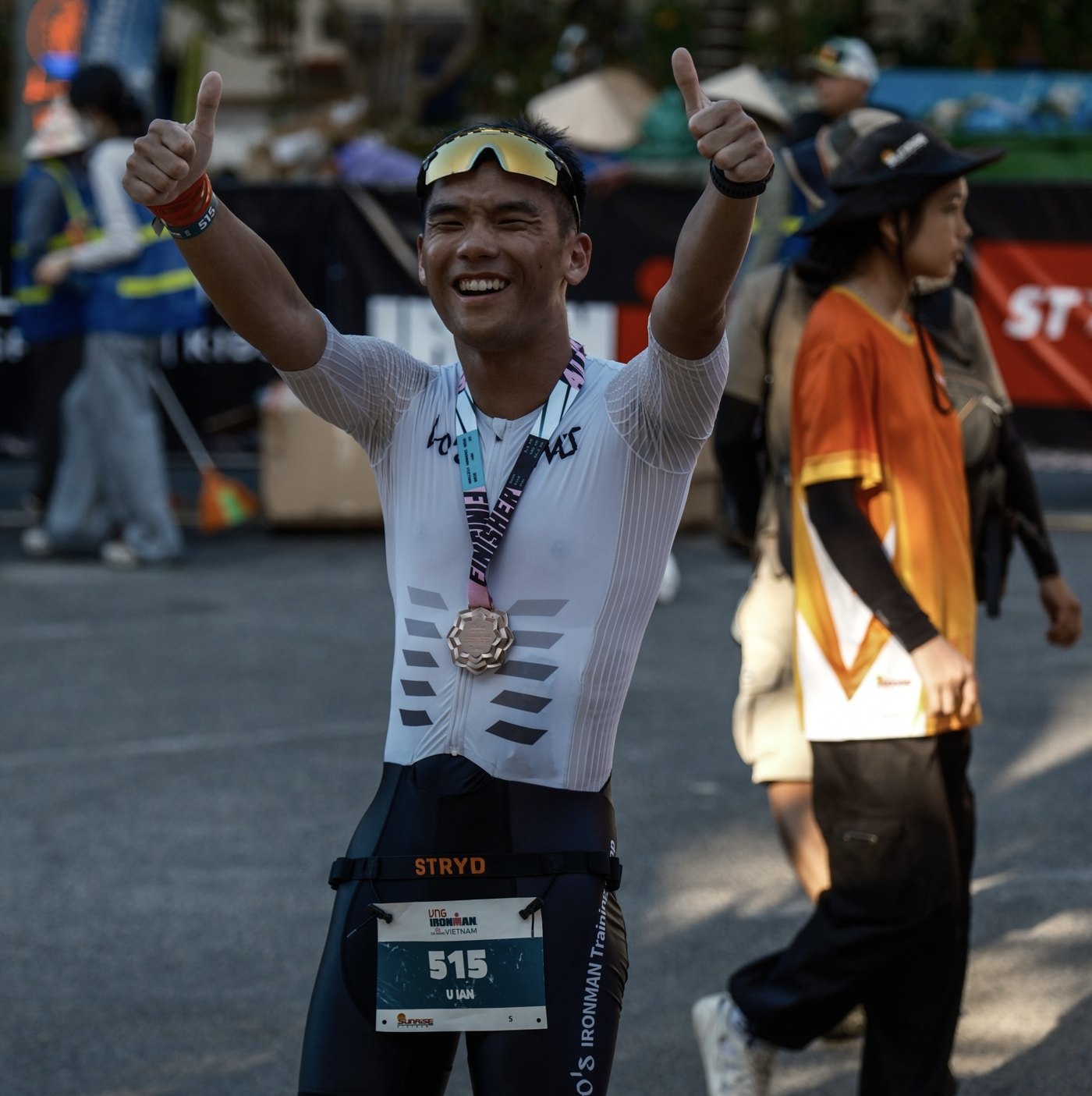
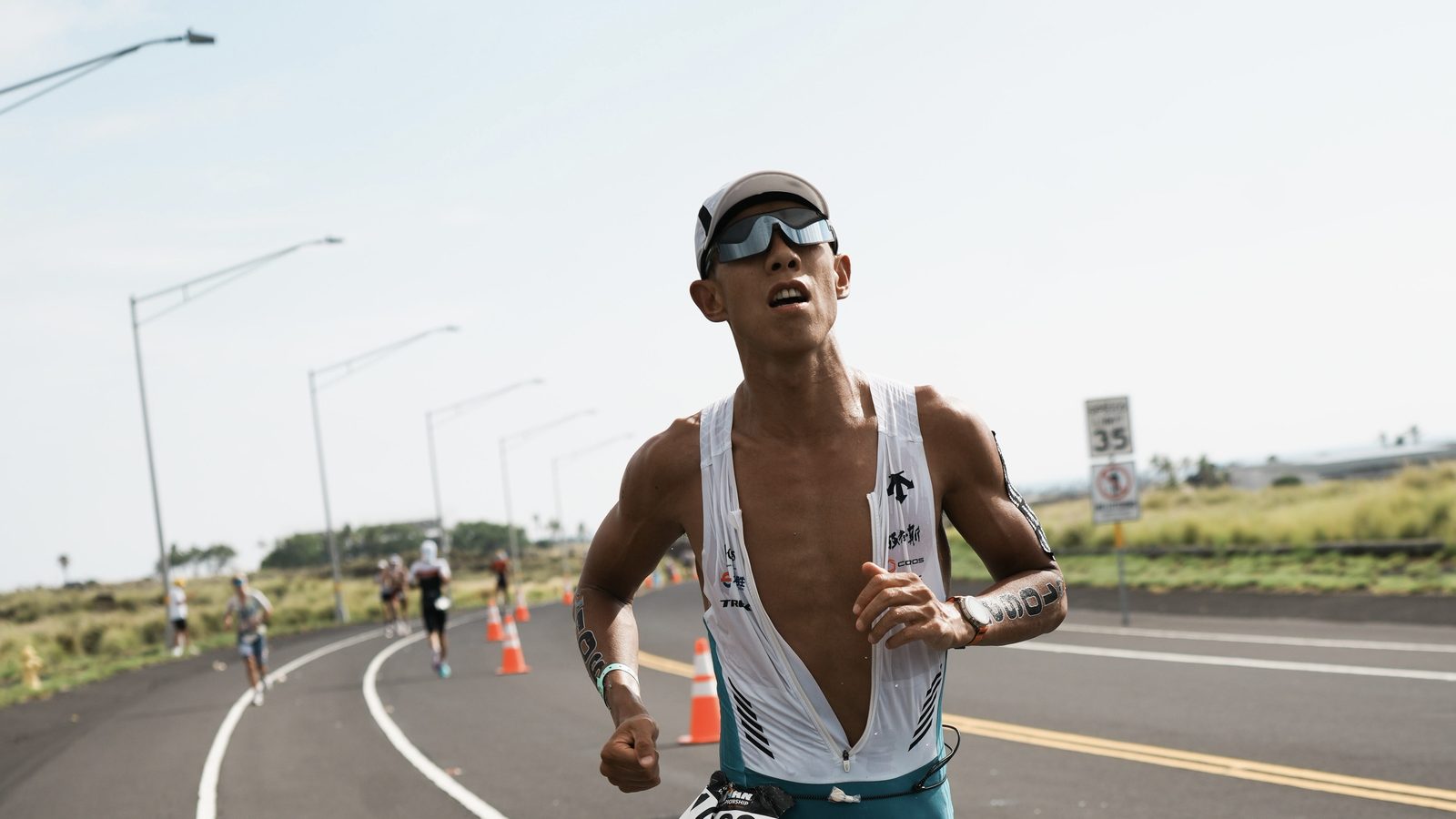
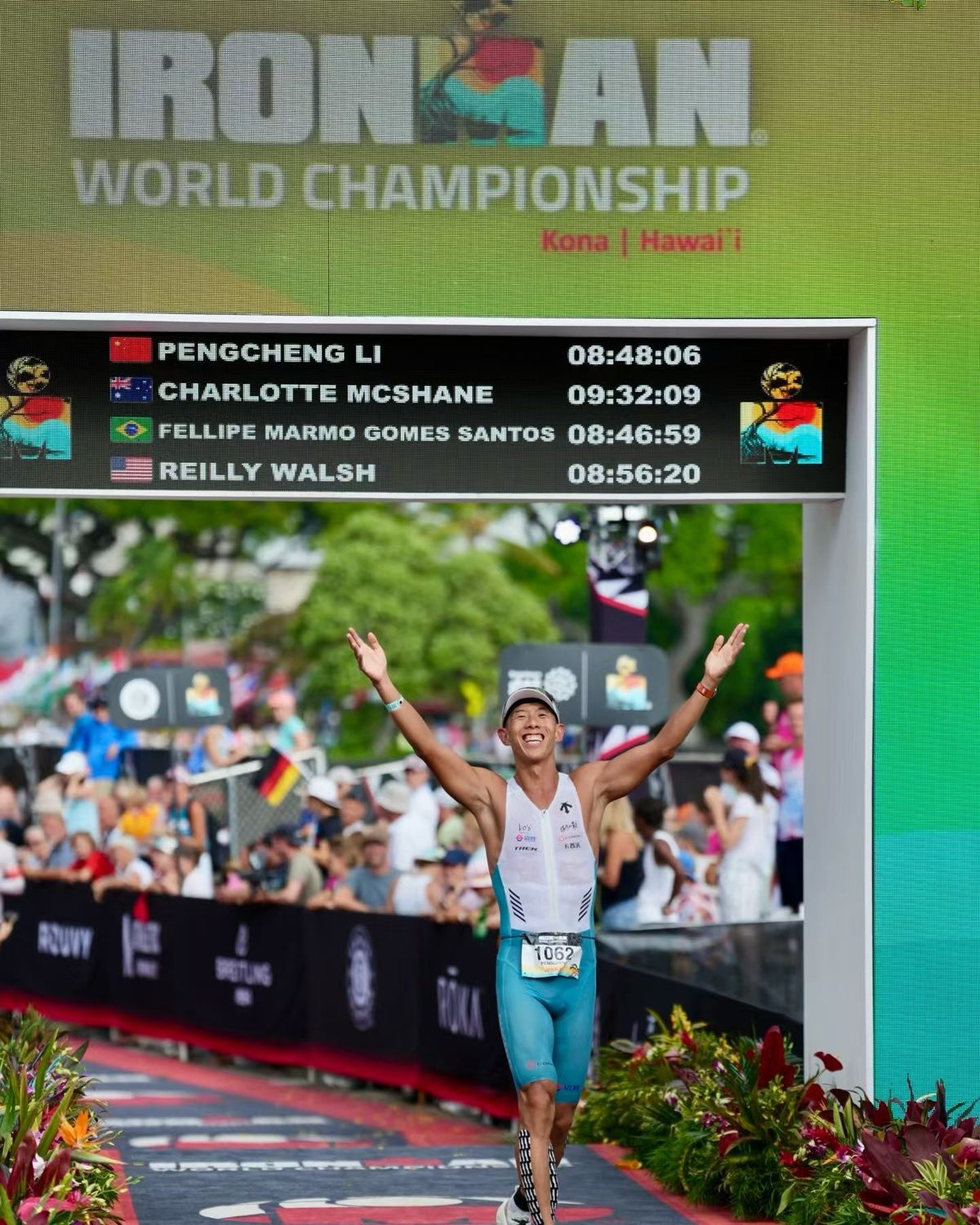
At this year's IRONMAN World Championship in Kona, Li Pengcheng finished third in the M35-39 age group. Cao Junyu was 19th, and Yanlong Kai was 28th.
Three athletes racing for an age-group place, and all three made the top 30.
Li Pengcheng crossed the line in 8:48:06, third in the world. Coming out of T2, he was 11:24 behind Santos, who ended up second. He ran a 2:56:40 marathon and got 10 of those minutes back.
Cao Junyu finished in 9:15:17 and moved from 30th in his age group out of T2 to 19th. Yanlong Kai finished in 9:23:37. He came out of T2 in 75th, passed 47 guys in his age group, and finished 28th.
| Athlete | Swim | Bike | Run | Overall | Out of T2 | Finish |
|---|---|---|---|---|---|---|
| Li Pengcheng | 57:21 | 4:45:42 | 2:56:40 | 8:48:06 | 6th | 3rd |
| Cao Junyu | 1:01:29 | 4:51:13 | 3:14:16 | 9:15:17 | 30th | 19th |
| Yanlong Kai | 1:08:53 | 4:56:06 | 3:09:37 | 9:23:37 | 75th | 28th |
2026 IRONMAN World Championship, M35-39 results. Overall times include T1 and T2. Places are age-group places.
That's how our team did at Kona this year.
The places are only part of it, though. What I really want to share is some of what went on behind this race.
1. Kona Qualification Got Harder in 2026
Getting onto an age-group podium at Kona was harder this year than it's ever been.
Starting this year, IRONMAN changed how World Championship slots are handed out. Each qualifier only guarantees one slot, to the winner of each age group. The rest are split by gender and allocated by ranking results that are adjusted across age groups. Beating everyone in your own age group may not be enough anymore. You also need an edge over athletes in every other age group.
The finish data shows how fast and how tough this year's race was, too.
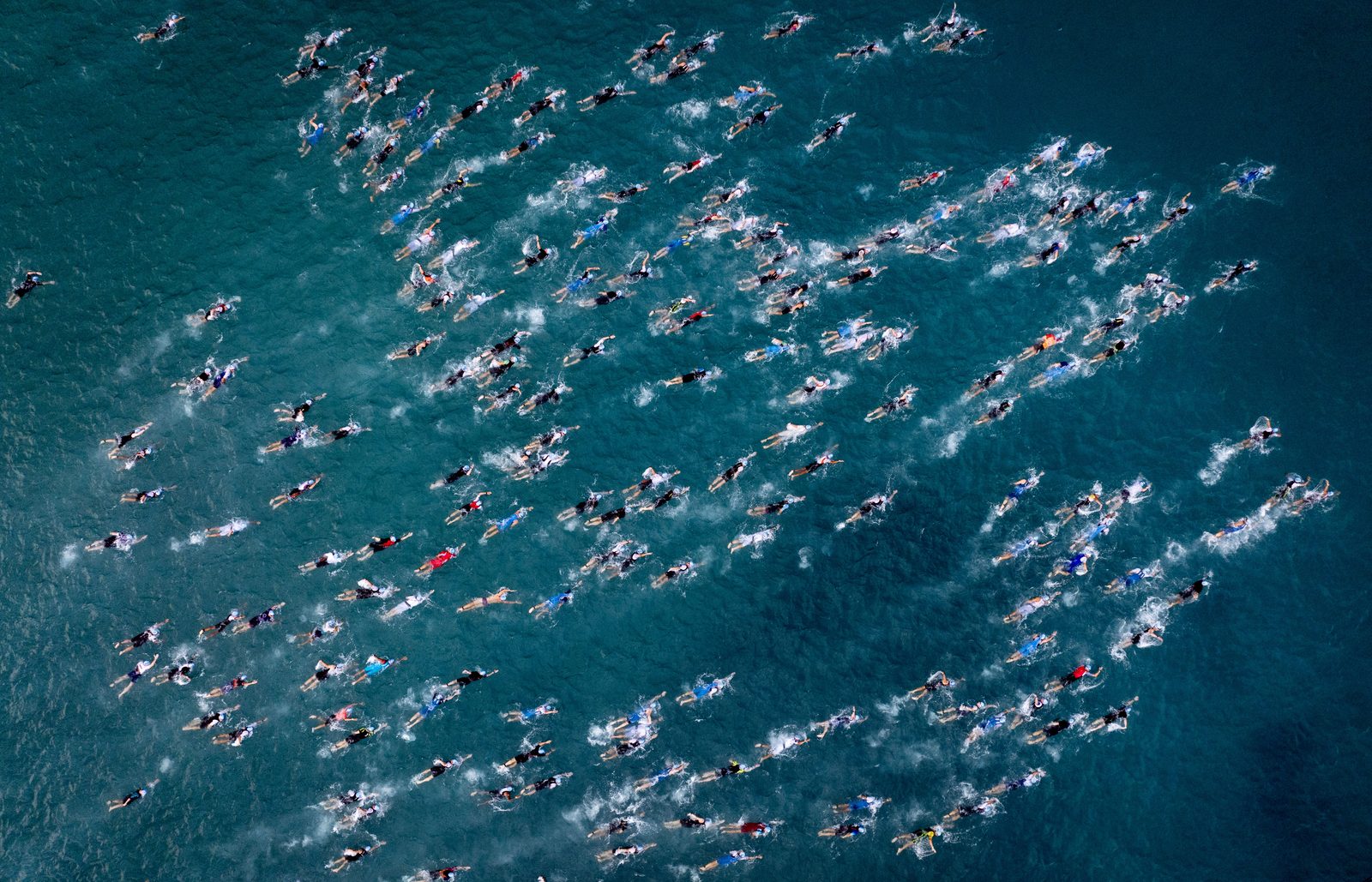
M35-39 starters dropped from 249 in 2024, when the men raced Kona on their own, to 156 this year. Even so, the median finish time for all men's age-groupers improved from 10:52 to 10:47. Everyone there was the best of the best. And in a field that strong, the men's age-group DNF rate went from under 4% to almost 6%.
Fewer athletes, faster times, and more DNFs.
2. The M35-39 Competition: Two Former Pros
Before the race, I put together a scouting report on Li Pengcheng's age group. At least two guys on the list had raced in the pro field.
Germany's Christoph Mattner is a former pro. In 2023 he went 7:52:58 at IRONMAN South Africa (the swim was shortened that day), and that same year he was second in the pro race at IRONMAN 70.3 Poznań. Back in the age-group ranks this year, he won his age group at IRONMAN Frankfurt and took a Kona slot.
Brazil's Fellipe Marmo Gomes Santos raced pro from 2016 to 2023 and went 7:45:42 in the pro race at IRONMAN Cozumel in 2021. He moved back to age-group racing in 2024, and this year he won M35-39 at IRONMAN South Africa.
In the end, those two went one-two in M35-39, in 8:40:34 and 8:46:59.
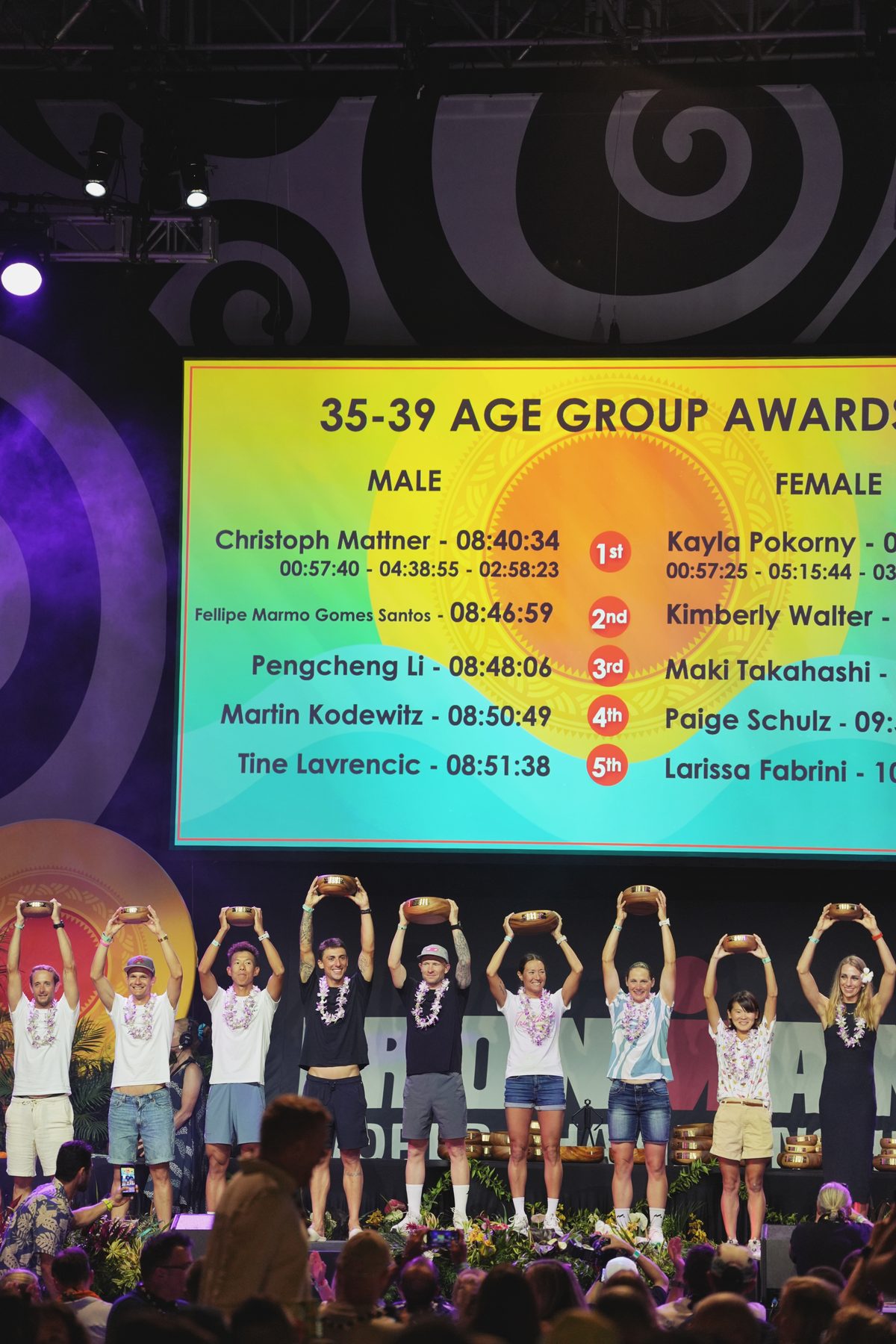
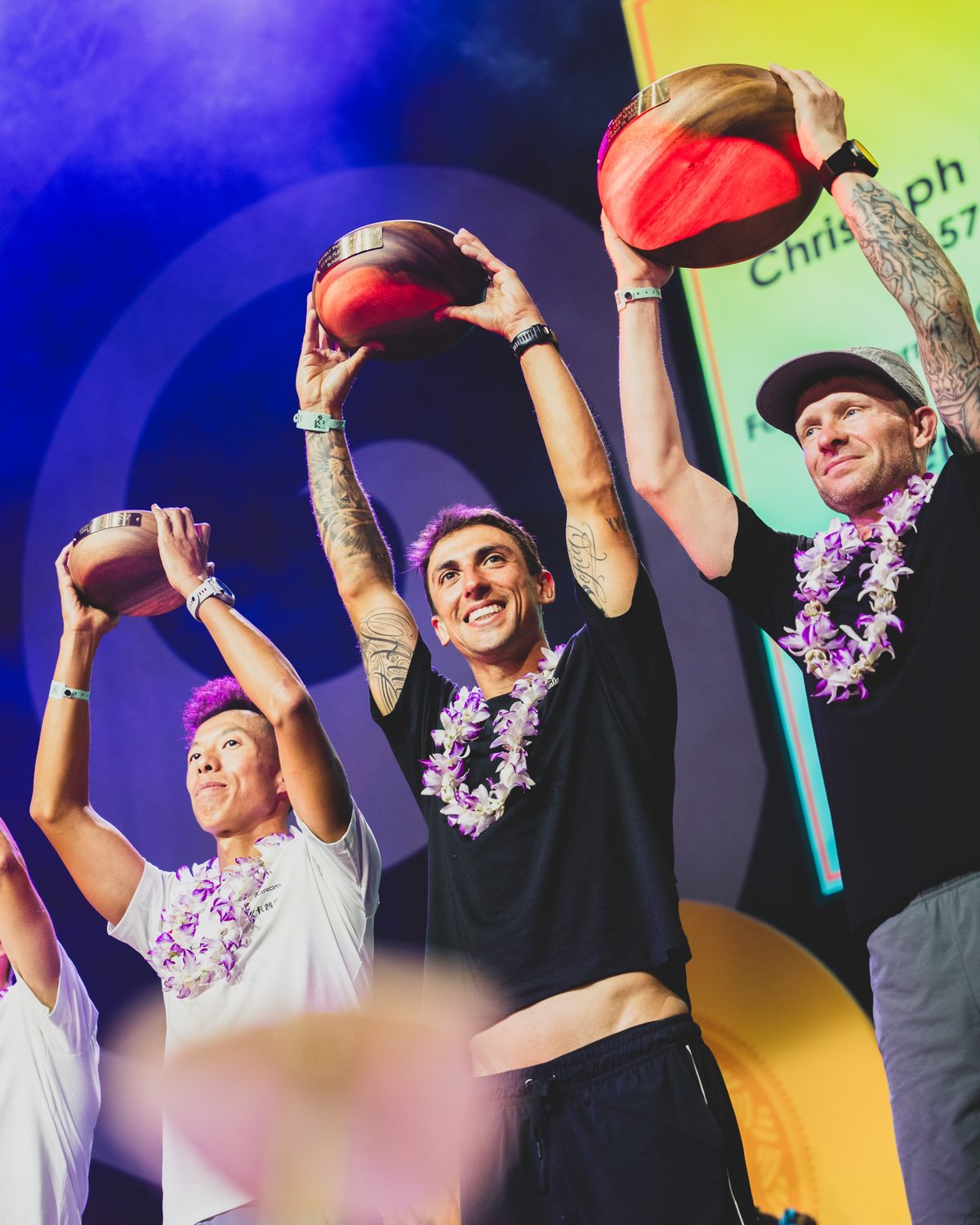
The rest of the age group was no joke either. At IRONMAN Hamburg in June, Germany's Martin Kodewitz went 7:59:55 and was the fastest age-grouper in the whole race. Li Pengcheng was 17 minutes behind him that day and finished second in his age group. Here at Kona, Kodewitz was fourth, and Li Pengcheng beat him by 2:43.
Taking third against a field like that is a big deal.
3. 11:24 Down Out of T2, and Li Pengcheng Ran a Negative Split
Li Pengcheng's splits: 57:21 swim, 4:45:42 bike, 2:56:40 run, 8:48:06 overall.
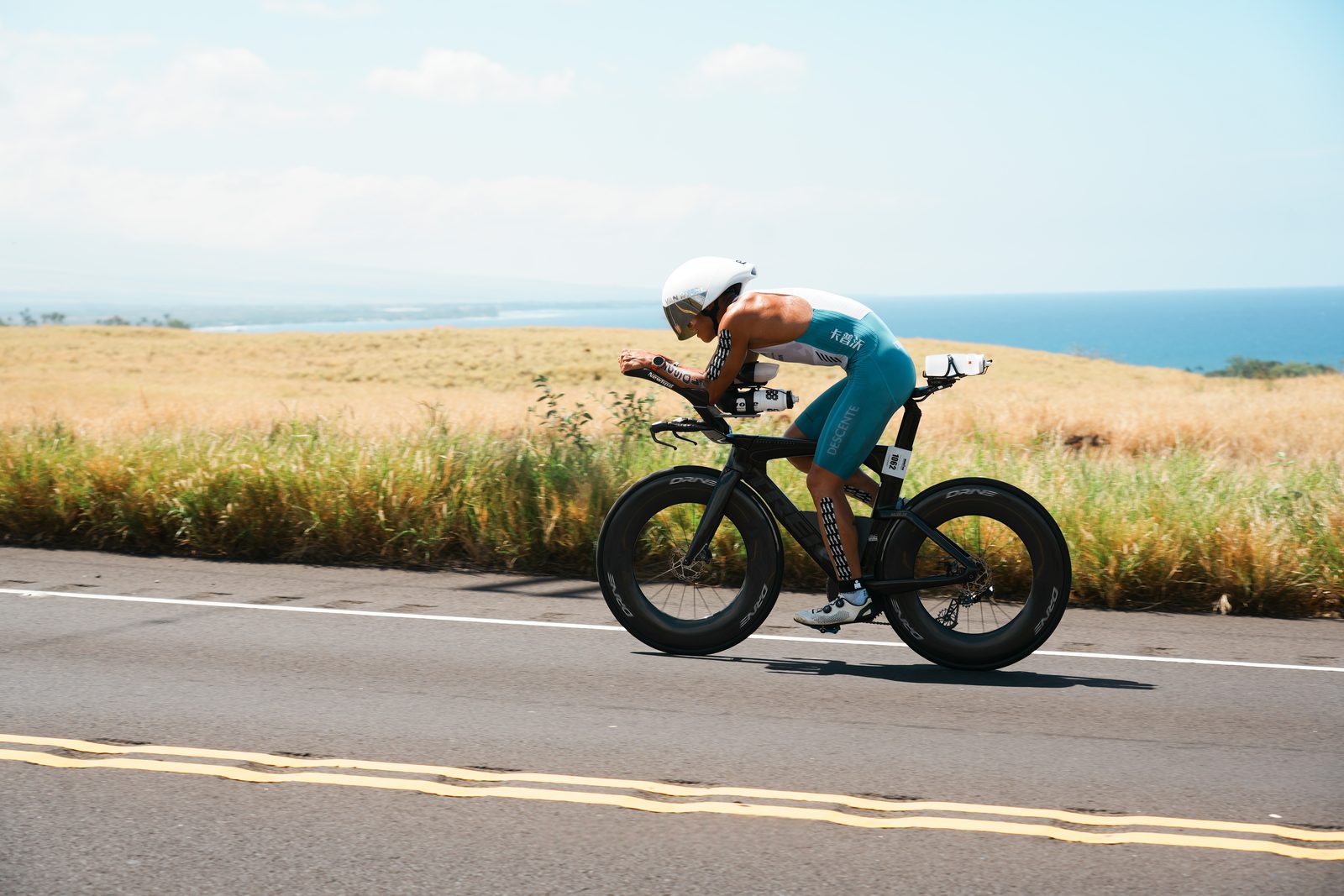
Out of T2, he was sixth in his age group, 11:24 behind Santos. Over 42.2 km he got back 10:17 and moved up to third. Even better, he ran the second half 71 seconds faster than the first. That's a negative split in brutal conditions.
Meanwhile, the two guys ahead of him both ran their second halves more than 4 minutes slower than their first.
| Athlete (final place) | First half | Second half | 2nd vs. 1st half |
|---|---|---|---|
| Mattner (1st) | 1:26:54 | 1:31:29 | 4:35 slower |
| Santos (2nd) | 1:31:20 | 1:35:35 | 4:15 slower |
| Li Pengcheng (3rd) | 1:28:55 | 1:27:44 | 1:11 faster |
| Kodewitz (4th) | 1:23:51 | 1:26:18 | 2:27 slower |
Halves estimated from the 21.1 km timing mat.
An IRONMAN marathon, especially at Kona, comes down to one thing. After 180 km on the bike, with the heat and the fatigue piling up, how much do you have left to use? The second half at Kona takes you into the Energy Lab and then back along the Queen K to town, with almost no shade the whole way.
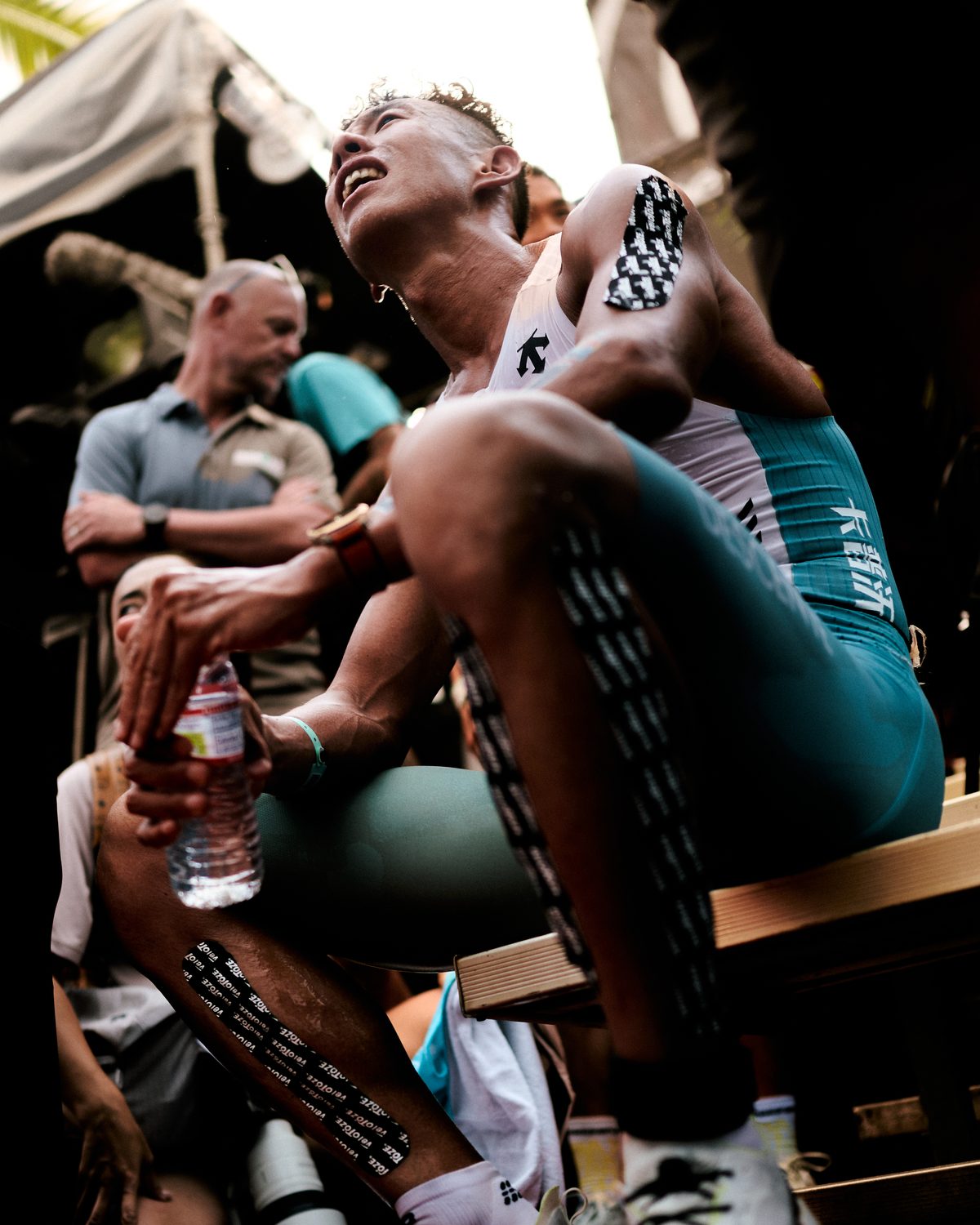
Take another look at that table. The fastest runner of the four was Kodewitz, at 2:50:11. But he came out of T2 in 28th, and even a run that fast only got him up to fourth. Mattner ran the first half in 1:26:54 and passed Santos before halfway. He lost four and a half minutes in the second half and still held on to the lead. Full-distance results add up across all three sports. However fast your marathon is, it depends on how big a gap opened up on the bike.
The marathon you can run fresh and the marathon you can run after 180 km on the bike can be very different things. I call that gap durability. I wrote about it in my durability article, which includes the yardstick I use: compare your standalone marathon with your full-distance marathon split. Within 10% is very strong, 20% is average, and 30% or more means you've got work to do.
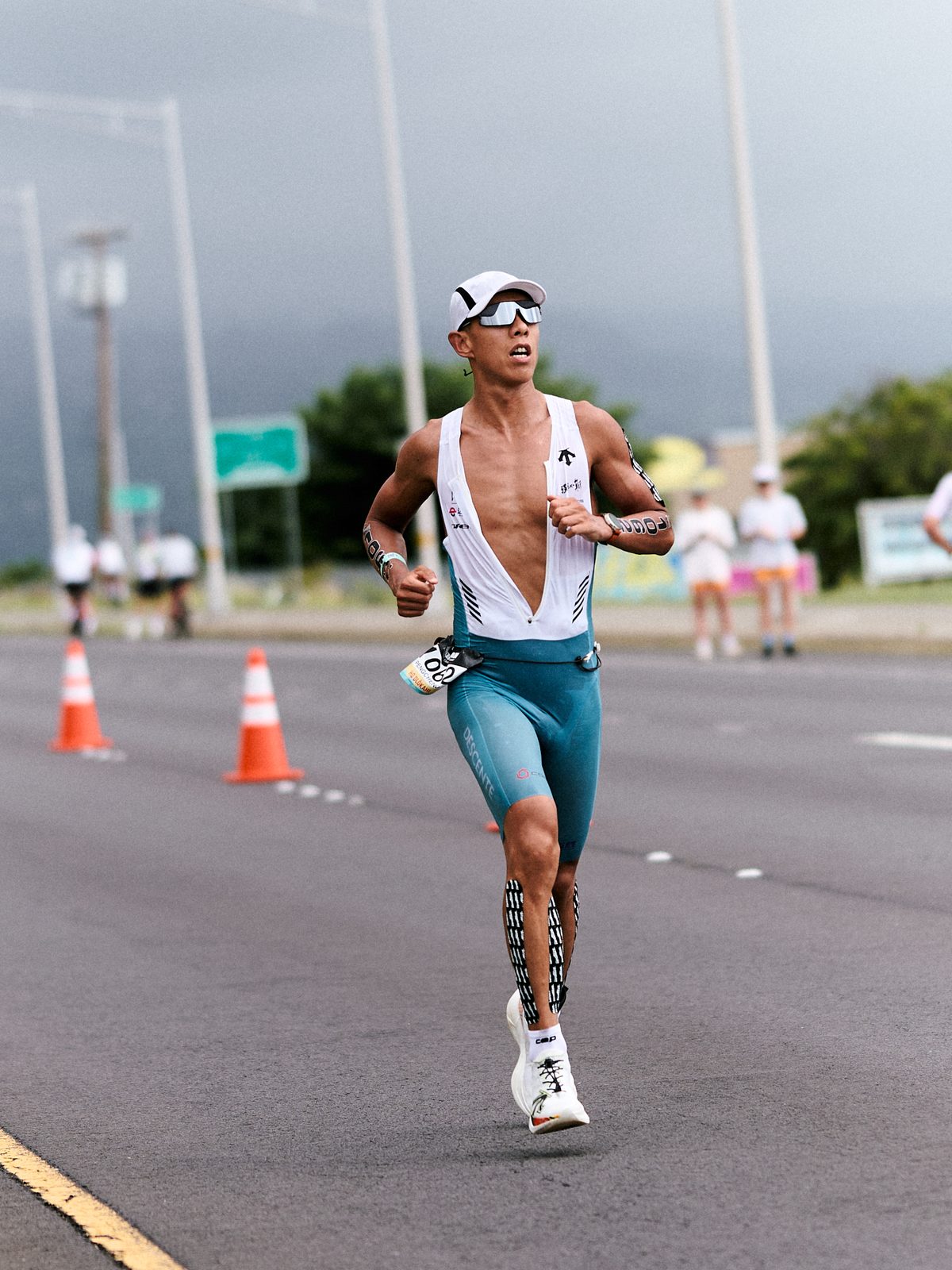
4. Kona 2026 Conditions: Rain, Swells, Wind, and a Run That Felt Like 30°C-Plus
Conditions this year were rough. Rain from the night before kept falling into the morning, the swells were big, the bike was a long fight into strong wind, and in the afternoon the heat index on the run was over 30°C.
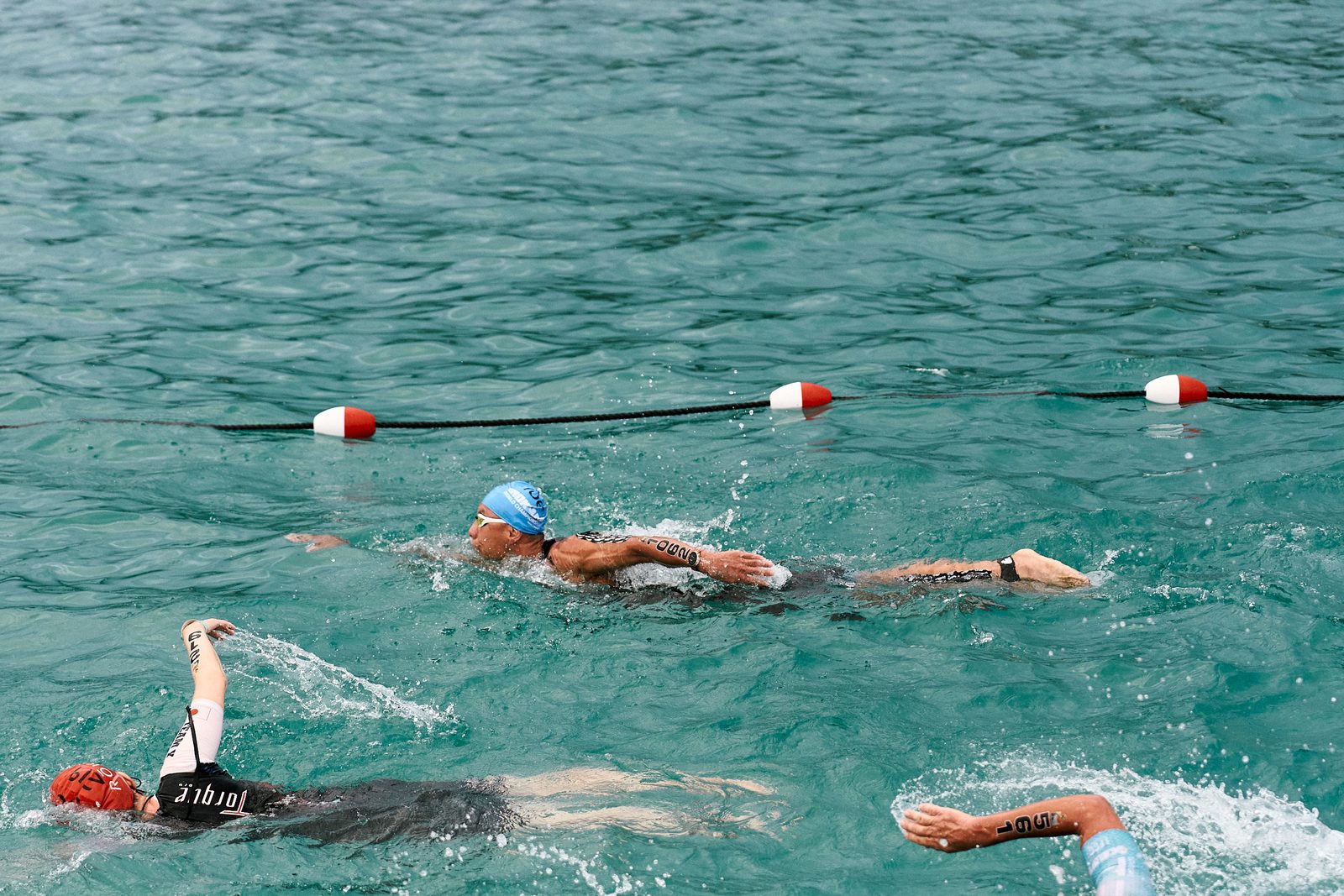
This year 2,417 athletes started and 155 didn't finish, a DNF rate of 6.4%. The 2024 men's race and the 2025 women's race were both at only 4.1%.
It was even more obvious in the pro field. Twenty-two pros didn't make it to the finish, and the DNF rate topped 20% in both the men's and women's races. Even 2024 world champion Patrick Lange pulled out on the bike. From what's been reported, he started cramping early, and no amount of drinking would make it stop. The women's pro DNF rate was 19% last year and only 6% in 2023.
I went through how cramping relates to fluid and sodium, using 30 years of Kona medical tent records, in Are Race Cramps Really About Electrolytes? I won't repeat it here.
5. Altitude Training Plus Heat Acclimation: Li Pengcheng's Last Few Months
Running a strong second half in conditions like that comes from the months of prep before the race.
Li Pengcheng started with four weeks of altitude training in Lijiang, at about 2,400 m. Once he came back down to sea level, he did four weeks of heat acclimation while gradually cutting volume to bring his form up. Four weeks before Kona, he won the men's age-group title at IRONMAN 70.3 Dali in 3:51:23. That race was at close to 2,000 m, and I wrote up what I learned there in Racing at 2,000 Meters: Faster on the Bike, Slower on the Run.
Altitude and heat are two different stimuli. At altitude the air is thin, and your body slowly builds up more oxygen-carrying red blood cells. Heat acclimation works on plasma volume and sweating first: your body learns to sweat earlier, so your heart rate doesn't have to climb as high in the heat. Both cost you fatigue. Stack them too close together and you'll be worn out before the adaptations have time to show up.
How you order the training, keep cumulative fatigue in check, and taper at the right time all come down to how you plan the entire build.
Doing a lot of training doesn't guarantee a good race. What really matters is whether you can turn that training into fitness you can actually use on race day.
I was really happy to see all that prep show up in how Li Pengcheng raced at Kona.
6. Cao Junyu and Yanlong Kai: Chasing All the Way from T2
Our other two athletes had great races, too.
Cao Junyu finished in 9:15:17, 19th in M35-39: 1:01:29 swim, 4:51:13 bike, 3:14:16 run. He came out of T2 in 30th in his age group and passed 11 guys in his age group on the marathon. Four weeks earlier, he was third in the men's age-group race at IRONMAN 70.3 Dali.
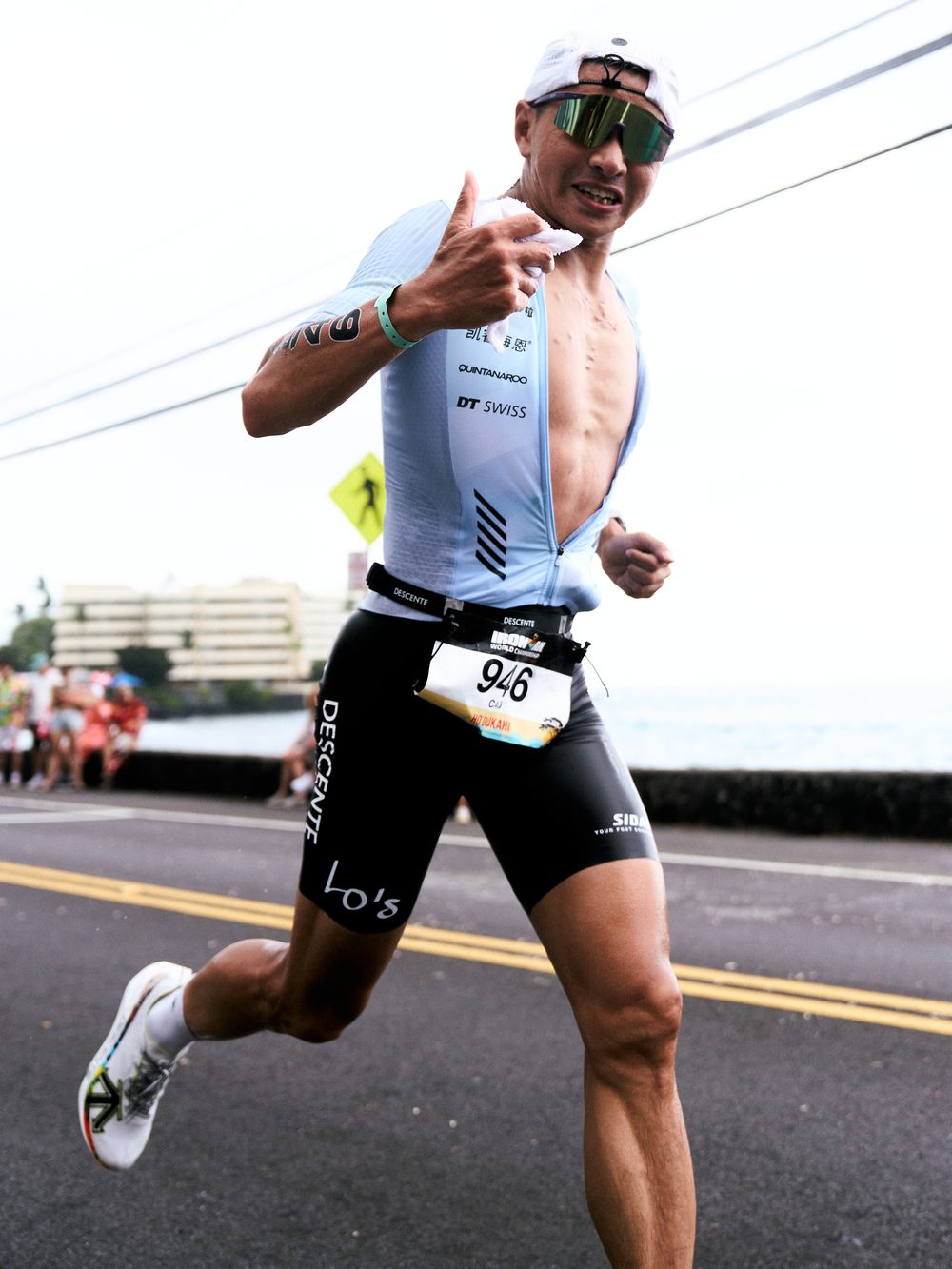
Yanlong Kai finished in 9:23:37, 28th in M35-39: 1:08:53 swim, 4:56:06 bike, 3:09:37 run. He was still 75th in his age group out of T2, and he passed 47 guys in his age group on the marathon. Both of his halves were a bit over 1:34, so he barely slowed down at all. I also broke down his training load curve over the last ten years in the durability article.
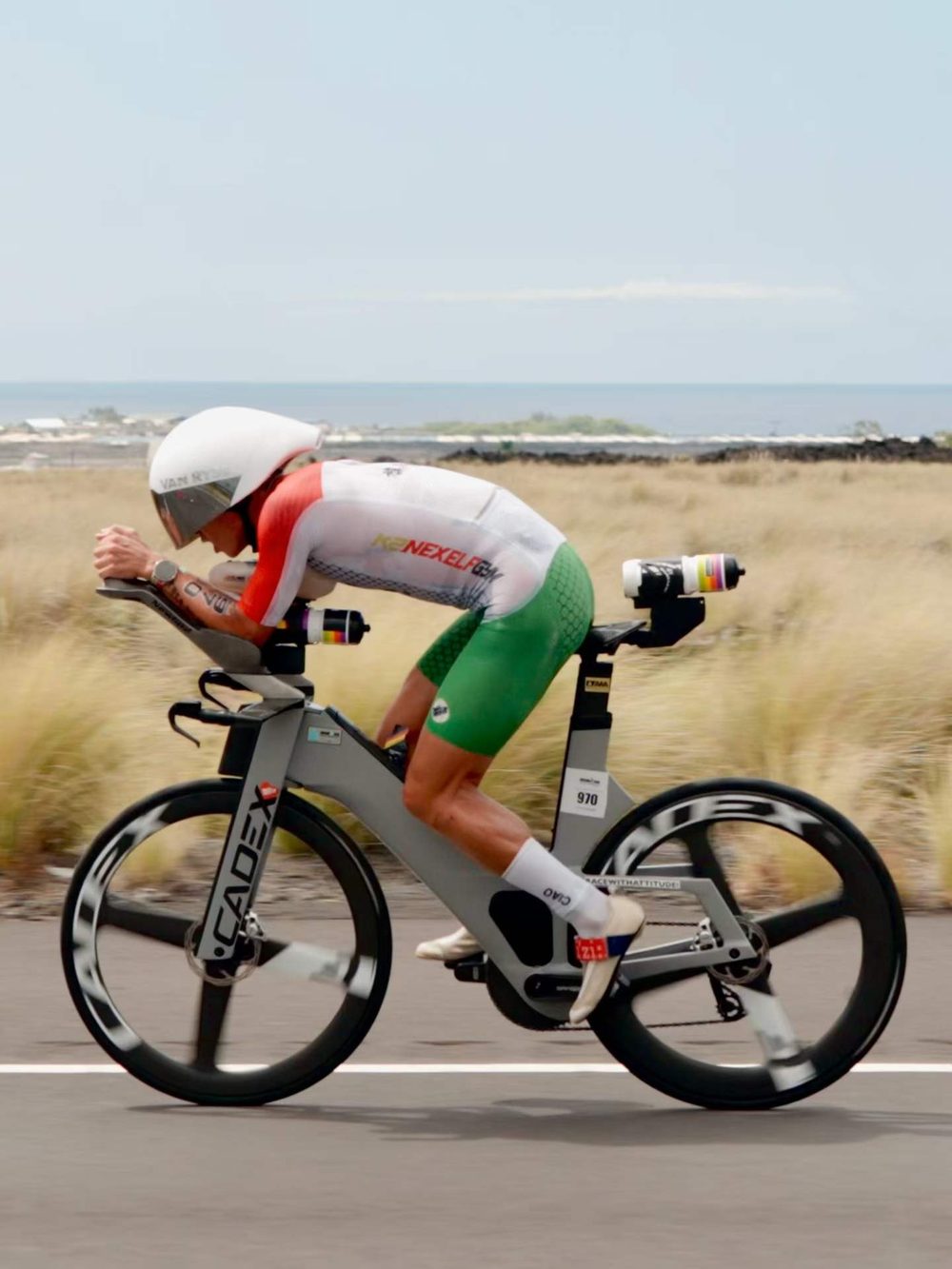
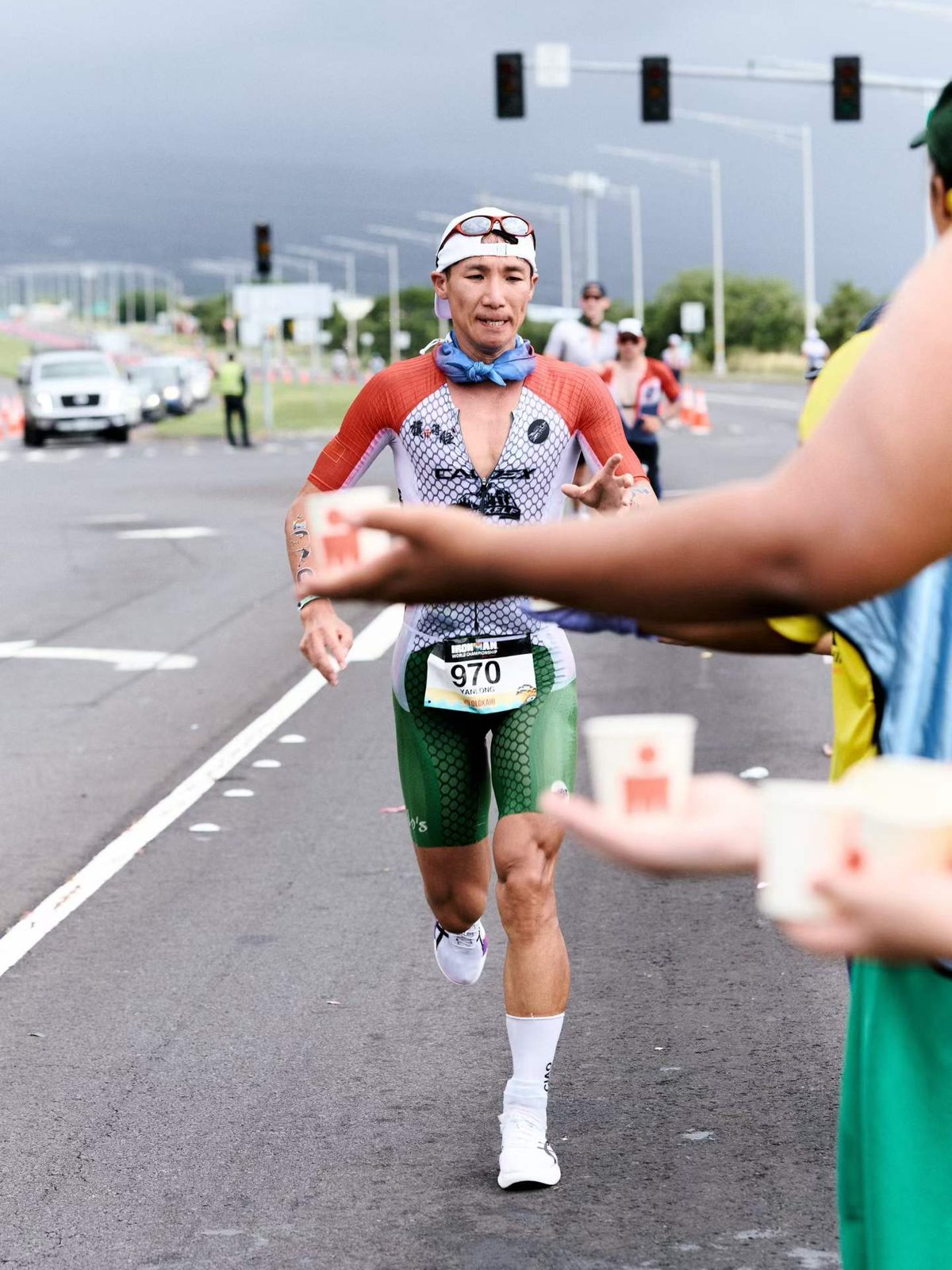
Three athletes, three very different races, and all three kept moving forward steadily on the marathon.
Two other athletes of ours, racing in other age groups, both finished, too. One of them took 1 hour and 26 minutes off the PR they'd set on the same course eight years ago!
7. One Training Philosophy, Three Very Different Athletes
Looking back on this year's World Championship, Li Pengcheng's third place isn't the only thing that hit me.
In the past, when Li Pengcheng posted great results, I never felt I deserved much of the credit. Most of the time I figured it came from his own hard work, his discipline, and years of building.
This time felt different.
My three fastest athletes train at different volumes, on different periodization, and their personalities and what they need from training are very different, too.
And yet, in the same race, all three got themselves to the level they should have been at.
A training method isn't only worth something for how far it can take one athlete. It's worth something when it can make the right calls and the right adjustments for each person's situation, so everyone keeps getting better.
I've never had much confidence, and I rarely brag. We still didn't win an age-group world title this year. But after Kona, I was truly happy.
Because this result made me believe more strongly that the training approach I've spent these past few years building is getting some things right.
Once the athletes got back, I couldn't even be bothered to post on social media. I just wanted to celebrate with everyone, talk, and enjoy the moment.
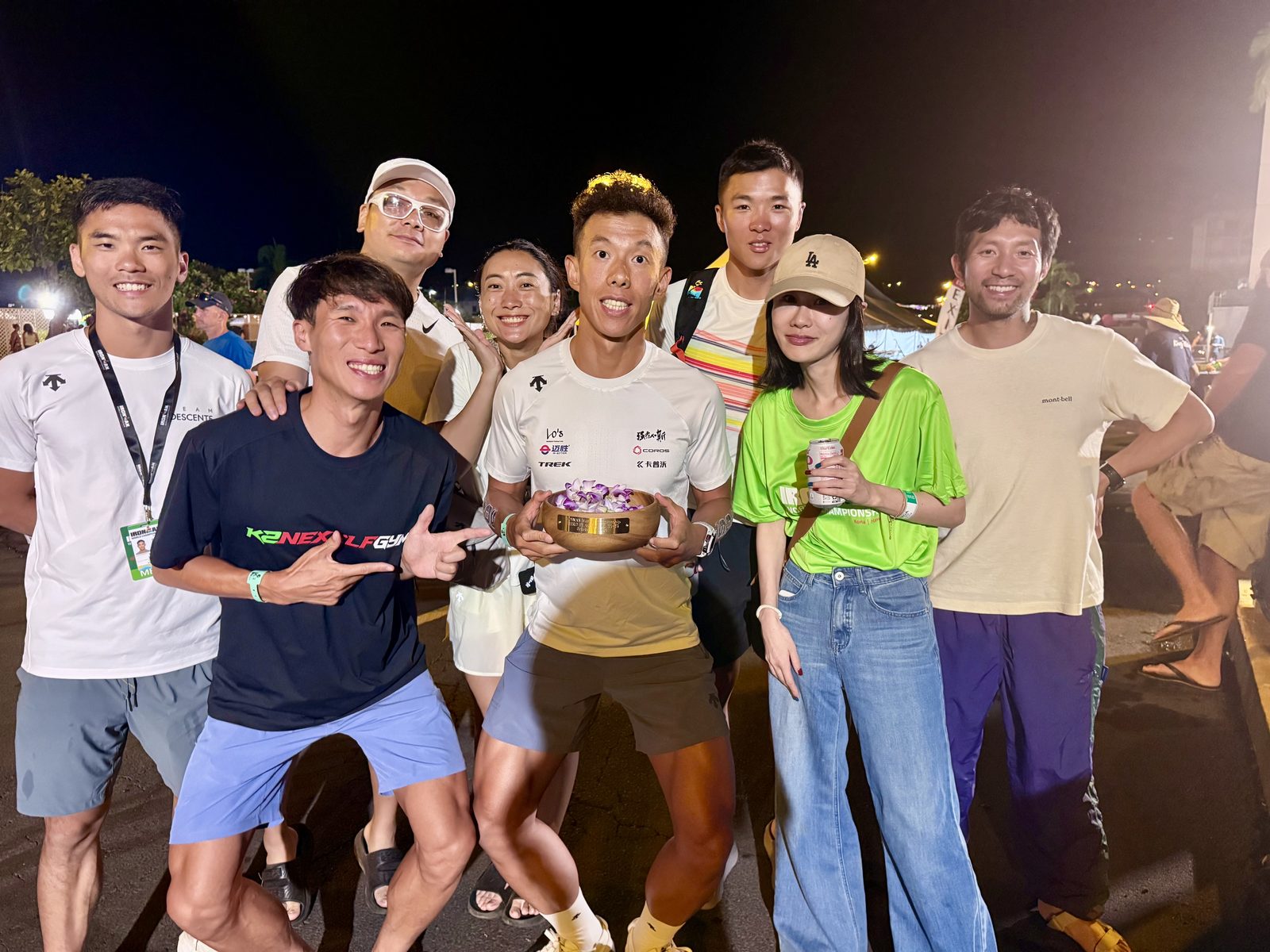
After all, the training plans, the data analysis, and the periodization are all for this moment.
Congratulations to Li Pengcheng, Cao Junyu, and Yanlong Kai, and to everyone who made it all the way to the finish at Kona.
Just getting to race on this course, and finishing it in conditions like these, is no small thing.
Mahalo, Kona.
How hard this year's Kona was as a whole, and why 22 pros didn't finish, is in a separate article: How Hard Was Kona 2026?
Editor's note: Results, splits, and places are compiled from the official race results. Marathon halves are estimated from the 21.1 km timing mat, and places out of T2 are ranked by the time each athlete reached T2.