My last article covered how our three athletes did at the 2026 IRONMAN World Championship in Kona. All three ran their way into the top 30 of their age group on the marathon. This one zooms out to the race as a whole.
So how hard was Kona this year? Adjectives won't get you there. Let's go straight to the numbers.
Twenty-two pros didn't finish, and several of the pre-race favorites went down here: 2024 world champion Patrick Lange, Sam Laidlow, who won the 2023 title in Nice, 2023 women's world champion Lucy Charles-Barclay, and 2024 runner-up Magnus Ditlev, who led until the final 10 km.
1. The Kona 2026 DNF Rate: 22 Pros Out, 6.4% Overall, the Highest in Five Years
That's 11 men and 11 women, a 21% DNF rate in the men's pro field and 23% in the women's. The women's pro DNF rate was 19% in 2025 and only 6% in 2023.
The full field tells the same story. This year 2,544 athletes registered and 127 didn't start. Of the 2,417 who did, 155 dropped out along the way, a DNF rate of 6.4%. The previous two editions were both at 4.1%.
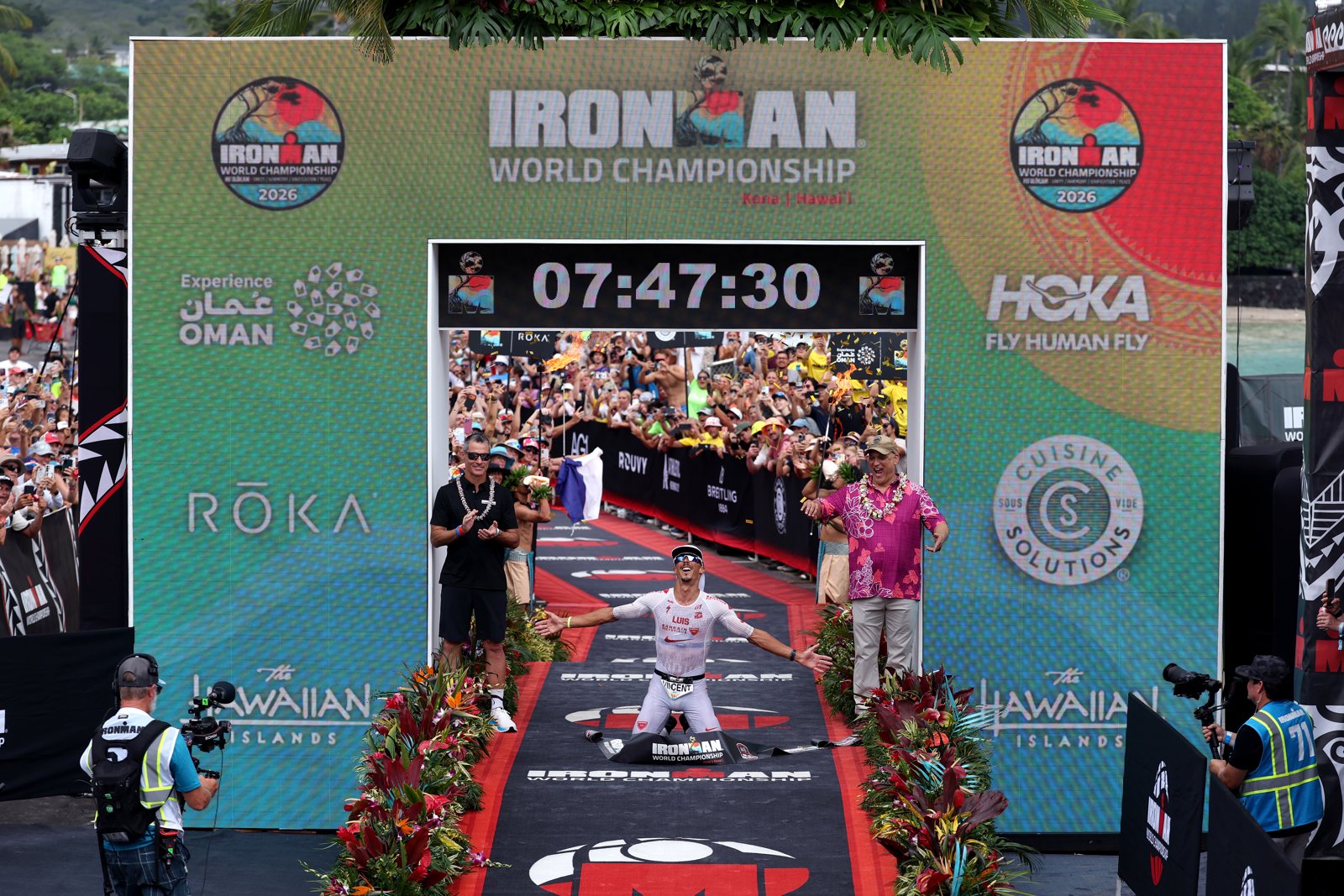
The winning times were slower, too. Men's champion Vincent Luis finished in 7:47:27, 11 and a half minutes off the course record of 7:35:53 that Lange set in 2024. Women's champion Taylor Knibb finished in 8:36:29, 8 minutes slower than Solveig Løvseth's 8:28:27 last year.
2. Kona 2026 Weather and Course Difficulty: The Same Athletes Swam 14% Slower
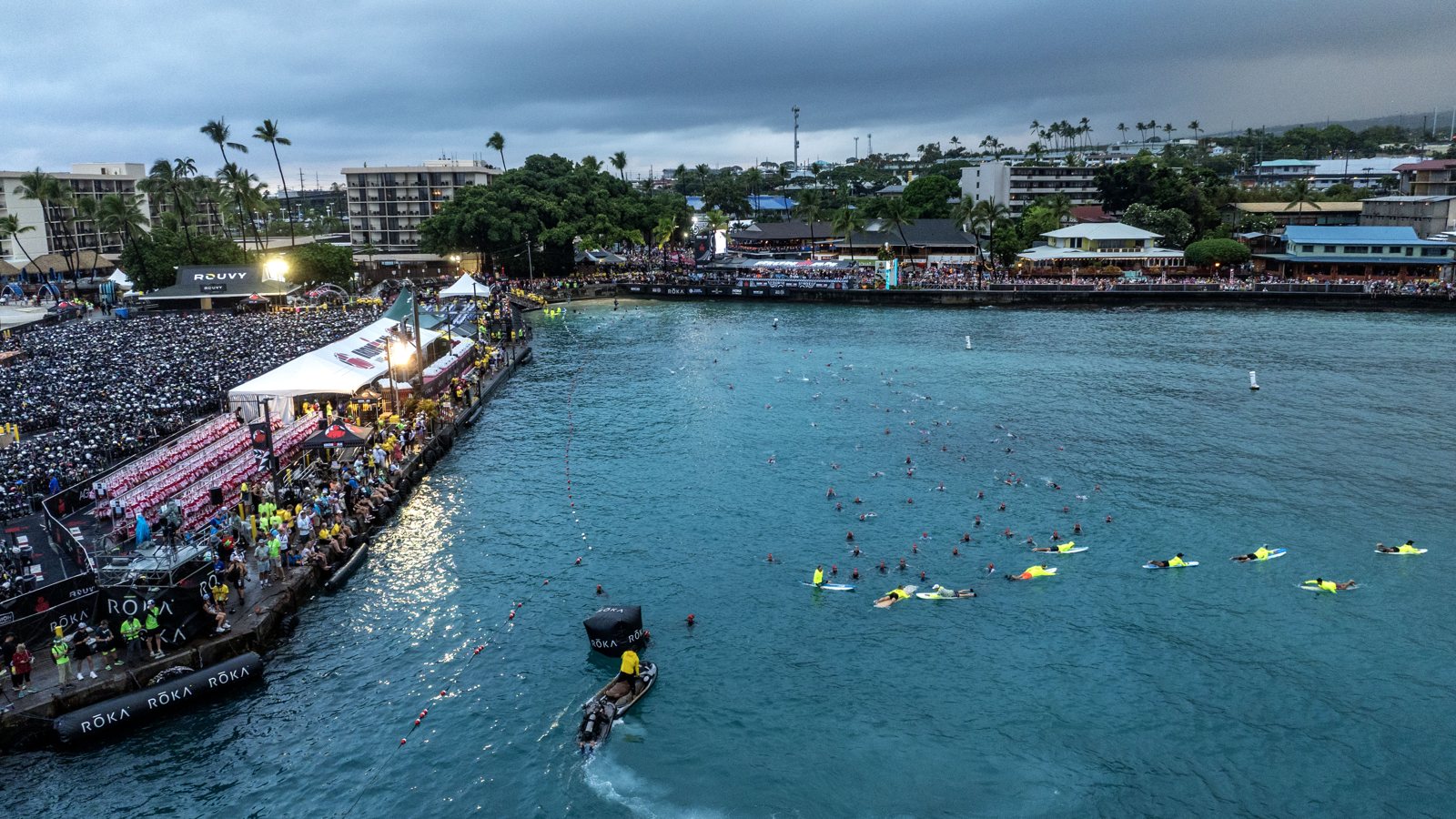
Heavy rain from the night before kept falling until around 10 a.m. The swim had big, broken-up swells. The roads were still wet at the start of the bike, and once the sun came out, the humidity shot up. Here's how it compares with the 2024 men's race:
| 2024 men's race | 2026 | |
|---|---|---|
| Early-morning humidity | 62–72% | About 88%, still raining |
| Average wind speed during the bike | About 23 km/h | About 30 km/h (highest of the last six editions) |
| Gusts during the bike | About 36 km/h | About 43 km/h |
| Heat index during the run | About 31.3°C | About 32.7°C |
Early-morning humidity comes from hourly observations at Kona airport. Wind speed and heat index are model estimates, weighted by where athletes were on the course each hour.
Weather only tells you what the conditions were. To know how much those conditions slowed the race, you have to compare the same athletes: how their Kona times stack up against their own times at other IRONMAN races. That takes differences in ability out of the picture, and what's left is the course and the conditions on the day.
| Edition | Overall | Swim | Bike |
|---|---|---|---|
| 2022 Thursday | +6.9% | +8.5% | +7.1% |
| 2022 Saturday | +5.2% | +9.2% | +3.6% |
| 2023 women's race | +3.3% | +8.0% | +2.3% |
| 2024 men's race | +5.0% | +8.1% | +3.7% |
| 2025 women's race | +5.0% | +13.3% | +3.8% |
| 2026 combined race | +6.6% | +14.0% | +5.1% |
How much slower the same athletes were at Kona than their average at other IRONMAN races. Source: UNPACE course difficulty.
Overall times were 6.6% slower, the second-slowest of the last six editions, just a bit easier than day one in 2022.
The biggest gap was in the swim. This year it was 14% slower, the slowest of the last six editions. An athlete who normally swims an hour spent roughly 8 extra minutes in the water. That said, the 2025 women's race was already at 13.3%, so the jump in difficulty started last year. This year only added a little more.
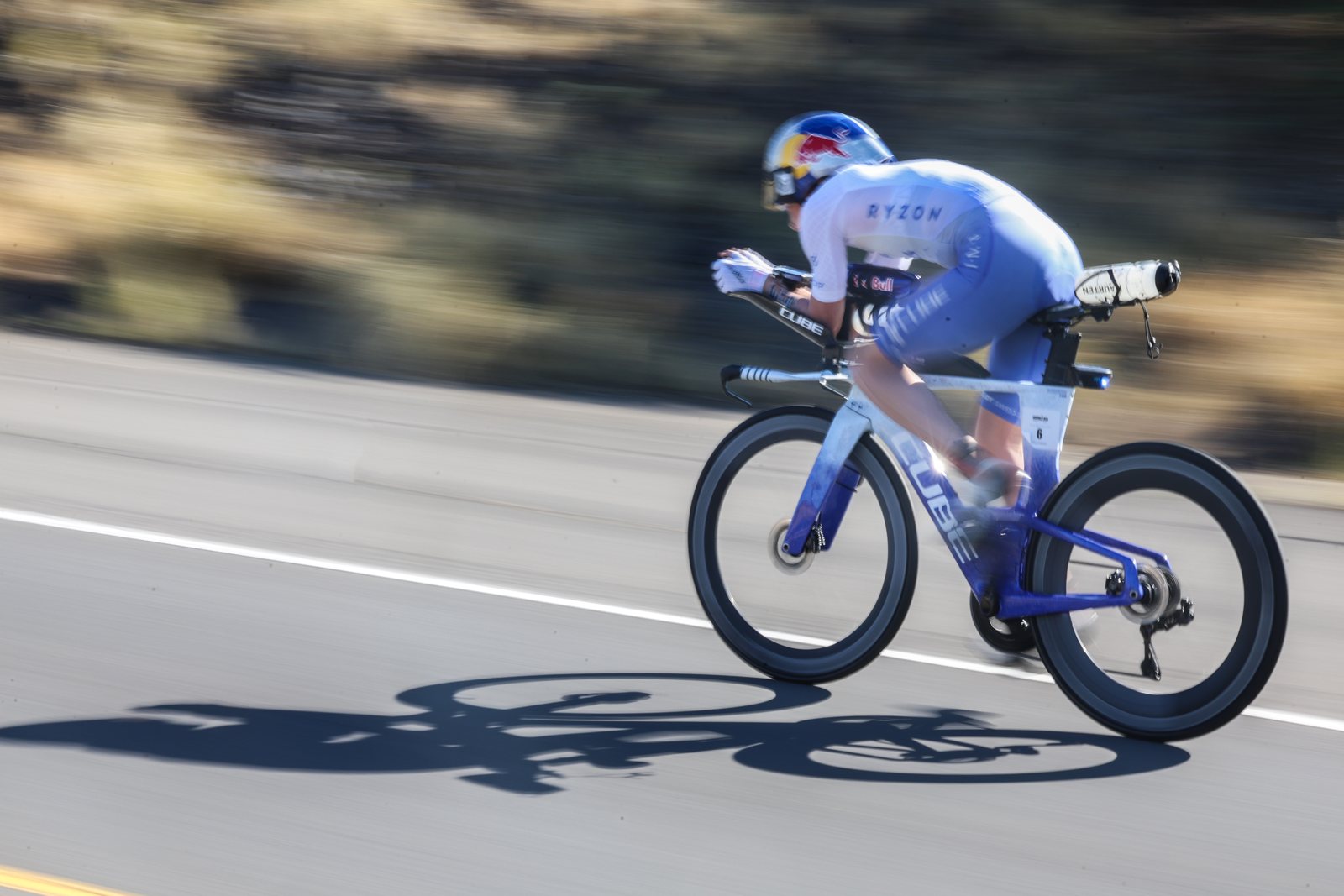
The bike was 5.1% slower, also second-slowest of the six. An athlete who normally rides 5 hours spent about 15 extra minutes on the bike this year; the same athlete in 2024 would have added about 11. In earlier editions, the Kona bike was usually only 2 to 4% slower than a typical IRONMAN.
The slowest bike of the six was actually 2022 Thursday. The wind during the bike that day was only about 15 km/h, but it was the hottest of the six editions, at about 29°C. Wind slows you down, and so does heat. This data can't tell you how much of the slowdown came from each.
3. Why Did 22 Pros DNF? Injury, Illness, Cramps, and Not Making It to the End
In the first group, 14 athletes, the body gave out first:
- Illness (3): Trevor Foley started feeling unwell the night before. Danielle Lewis had a sore throat the day before the race and tested positive for influenza A afterward. Daisy Davies got sick during race week and had no power on the bike. 2022 champion Chelsea Sodaro tested positive for flu before the race and never made it to the start line. Since she didn't start, she isn't counted among the 22.
- Cramps (2): Lange started cramping not long after getting onto the Queen K and held on all the way to the Hawi turnaround before pulling out. India Lee's thigh cramped during the swim, both legs started cramping again 10 km into the bike, and she finally stopped in the Energy Lab.
- GI issues and vomiting (3): Tristan Olij started throwing up 60 km into the bike, on the same fueling plan he'd used for three years. Lucy Charles-Barclay stopped during the run, and the broadcast showed her vomiting. Franziska Hofmann had a migraine come on before the race, with blurred vision, and vomited throughout the bike.
- Injury (6): Laidlow's iliac artery problem restricted blood flow to his left leg, and the whole leg went numb on the run. Andrea Salvisberg had severe hip pain halfway through the bike, could only pedal with one leg, and then flatted. Jamie Riddle's sciatica flared up. Nathan Guerbeur rolled his ankle 25 km into the run. Rudy von Berg had severe lower-abdominal pain after 25 km of the run. Danielle Fauteux chose to pull out rather than risk making an old foot injury worse.
The second group, 8 athletes, either didn't have it on the day or couldn't hold on to the end. Some were clearly off the pace in the swim, some were pulled by volunteers just a few miles into the run, and a few haven't said publicly why yet.
On how cramping relates to fluid and sodium intake, I went through 30 years of Kona medical tent records in Are Race Cramps Really About Electrolytes? What to do after your first cramp mid-race is in that article, too.
4. Leading Early, Fading Late: The Script Ditlev, Laidlow, and Løvseth Keep Replaying at Kona
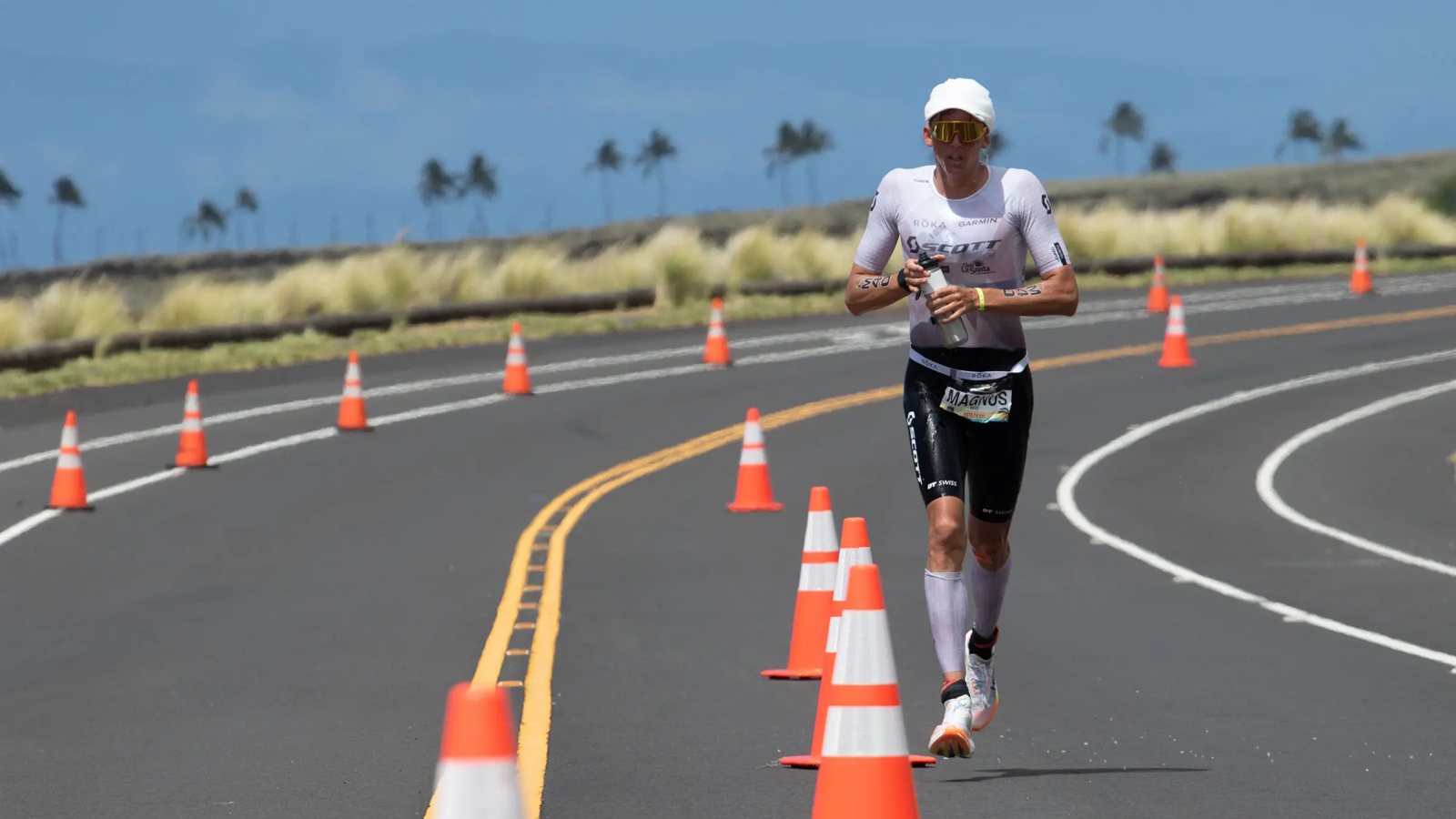
Of those 8, the hardest one to watch was Ditlev. He rode the fastest bike split of the day, 4:06:47, and came off the bike with a big lead. With about 10 km to go, in his own words, "the lights suddenly went out." He eventually dropped out.
This script has played out at Kona again and again over the last few years:
- In 2024, Sam Laidlow set the bike course record of 3:57:22 and came off the bike about 9 minutes ahead of Lange. He finished 18th.
- In 2025, Knibb came off the bike with the lead and, less than 4 km from the finish, ended up sitting on the road.
- This year, Solveig Løvseth was more than 6 minutes down at 138 km, fought her way up to third off the bike, and led for a while on the run. In the final kilometer she collapsed, walked across the line, and finished 8th.
One detail about Løvseth is worth thinking about. Last year she won in 8:28:27. This year, at almost exactly the same elapsed time, she started wobbling and falling. The weather added a few minutes to the race, but the amount of time her body could hold on didn't get any longer.
That's just one reading, and nobody has confirmed it, but I think it makes a lot of sense: at Kona, how long your body can hold on is measured in time. When the weather turns, a plan that was just enough isn't enough anymore.
5. Kona 2026 Pro Results: Top-Five Splits, and Why the Fastest Bike Doesn't Always Win
| Place | Men | Swim | Bike | Run | Overall |
|---|---|---|---|---|---|
| 1 | Vincent Luis | 48:30 | 4:15:41 | 2:38:35 | 7:47:27 |
| 2 | Gustav Iden | 50:09 | 4:17:09 | 2:36:57 | 7:49:02 |
| 3 | Matthew Marquardt | 48:24 | 4:11:27 | 2:43:57 | 7:49:58 |
| 4 | Gregory Barnaby | 50:09 | 4:11:22 | 2:44:43 | 7:51:01 |
| 5 | Pierre Le Corre | 48:28 | 4:20:46 | 2:38:49 | 7:53:28 |
| Place | Women | Swim | Bike | Run | Overall |
|---|---|---|---|---|---|
| 1 | Taylor Knibb | 52:55 | 4:40:07 | 2:57:46 | 8:36:29 |
| 2 | Laura Philipp | 1:00:03 | 4:43:00 | 2:50:43 | 8:39:34 |
| 3 | Julie Derron | 53:09 | 4:49:35 | 2:58:54 | 8:46:25 |
| 4 | Kat Matthews | 54:57 | 4:55:34 | 2:52:50 | 8:49:38 |
| 5 | Imogen Simmonds | 53:08 | 4:45:21 | 3:07:45 | 8:51:44 |
Bold marks the fastest split among the top five. Overall times include T1 and T2.
In the men's top five, the two fastest cyclists, Marquardt and Barnaby, finished third and fourth. Luis and Iden, first and second, were only mid-pack among these five on the bike. What won it for them were the two fastest marathons in the top five. Iden also took a 3-minute penalty on the bike and lost to Luis by just 1:35. Those 3 minutes may well have been the difference between first and second.
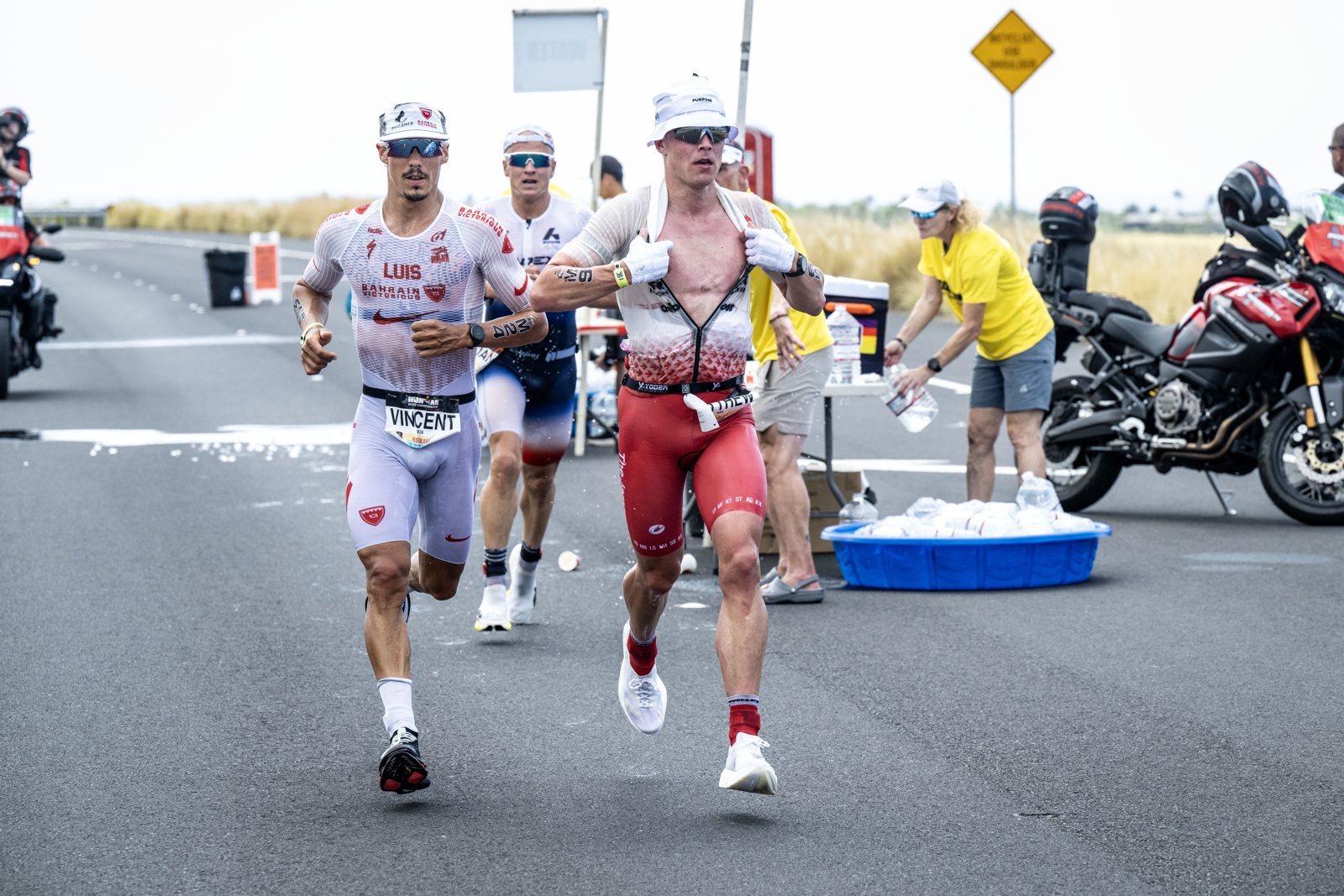
Same story in the women's race. Philipp came out of the water more than 7 minutes behind Knibb and took second with a 2:50:43 marathon, the fastest in the top five. Matthews lost 15 minutes to Knibb on the bike, passed more than ten women on the marathon, and finished fourth.
6. Champions Vincent Luis and Taylor Knibb: The Podium Went to the Athletes Whose Marathon Held Up
Knibb said after the race that her power dropped noticeably late in the bike, and her marathon was close to 3 hours. She collapsed before the finish last year, so this year she likely caught the warning signs earlier and backed off a little. Julie Derron, racing Kona for the first time, took a 3-minute penalty on the bike and walked several stretches of the marathon, and still held on to third. Men's champion Luis was also racing Kona for the first time.
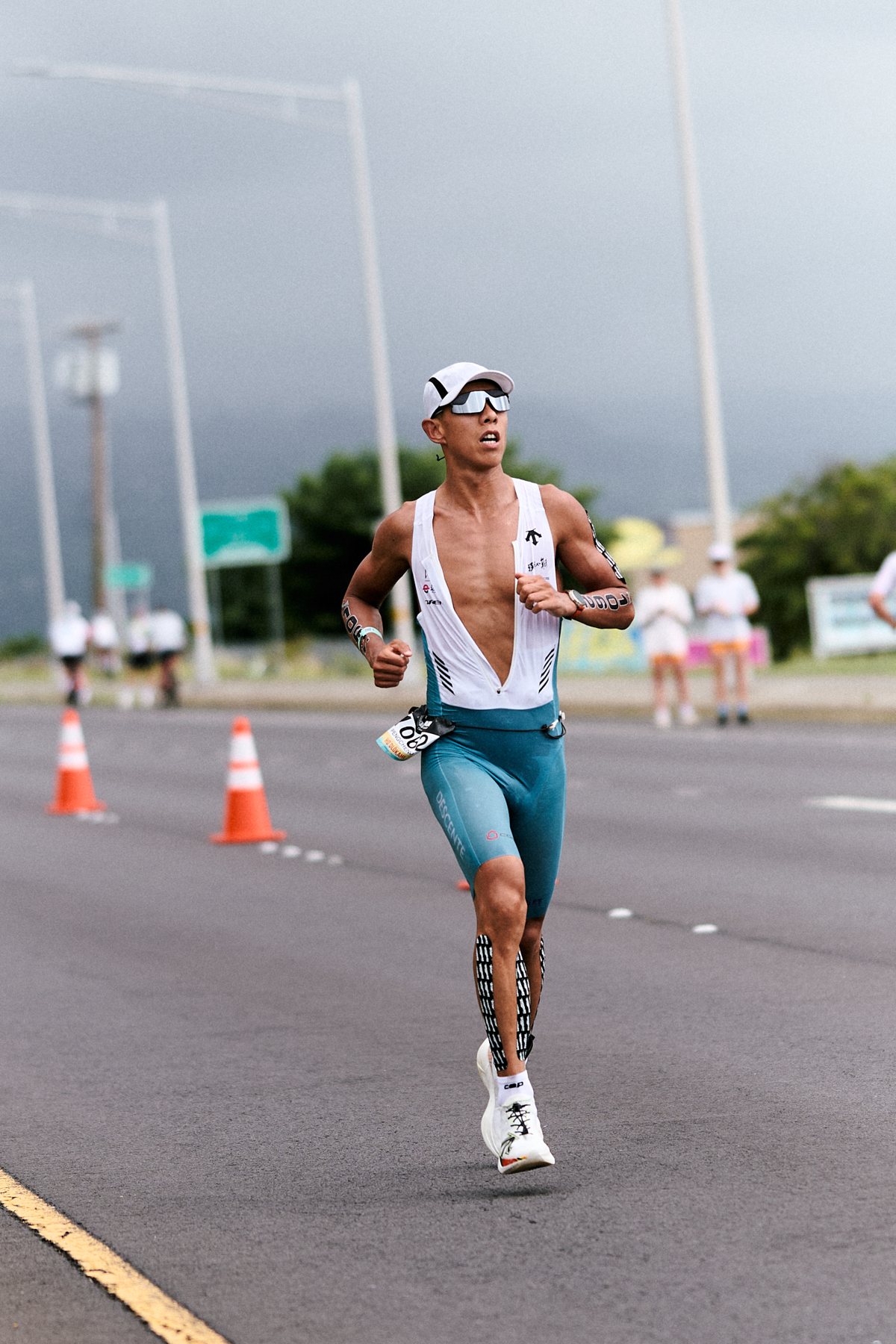
Now look at the whole field: none of the top nine men's pros ran the second half of the marathon faster than the first, and only 12.7% of age-groupers ran a negative split. In weather like this, the winners didn't speed up. They just slowed down less than everyone else.
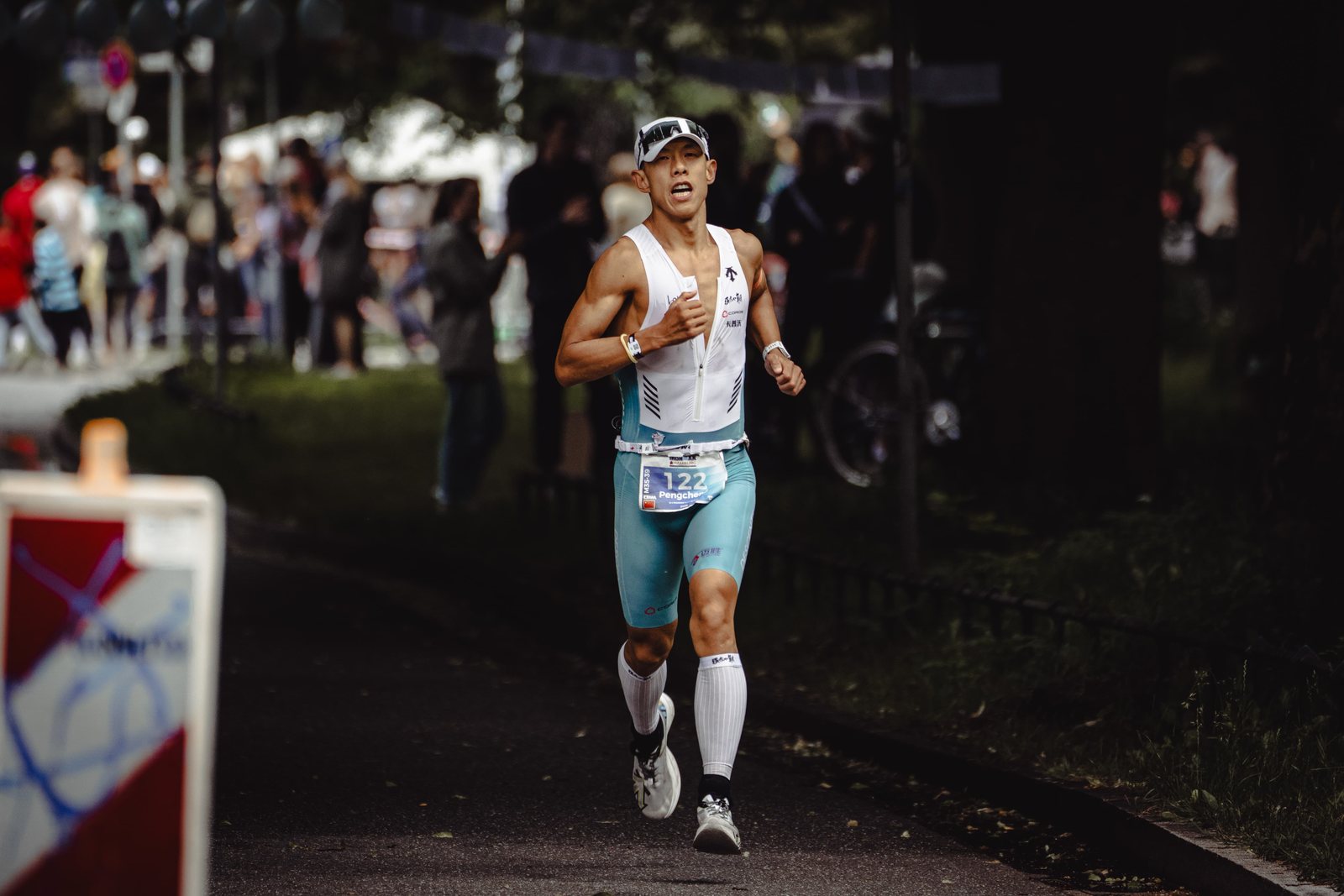
Li Pengcheng, from my last race report, was one of that 12.7%. His second half was 71 seconds faster than his first, while the two former pros who went one-two in his age group both ran their second halves more than 4 minutes slower.
I covered fading slowly in my article on durability, using the gap between a standalone marathon and a full-distance marathon split as a yardstick. Kona magnifies that yardstick: the tougher the weather, the bigger the edge for athletes who fade slowly.
7. Asia's Only Pro: How Far Is Jumpei Furuya from the Top 8?
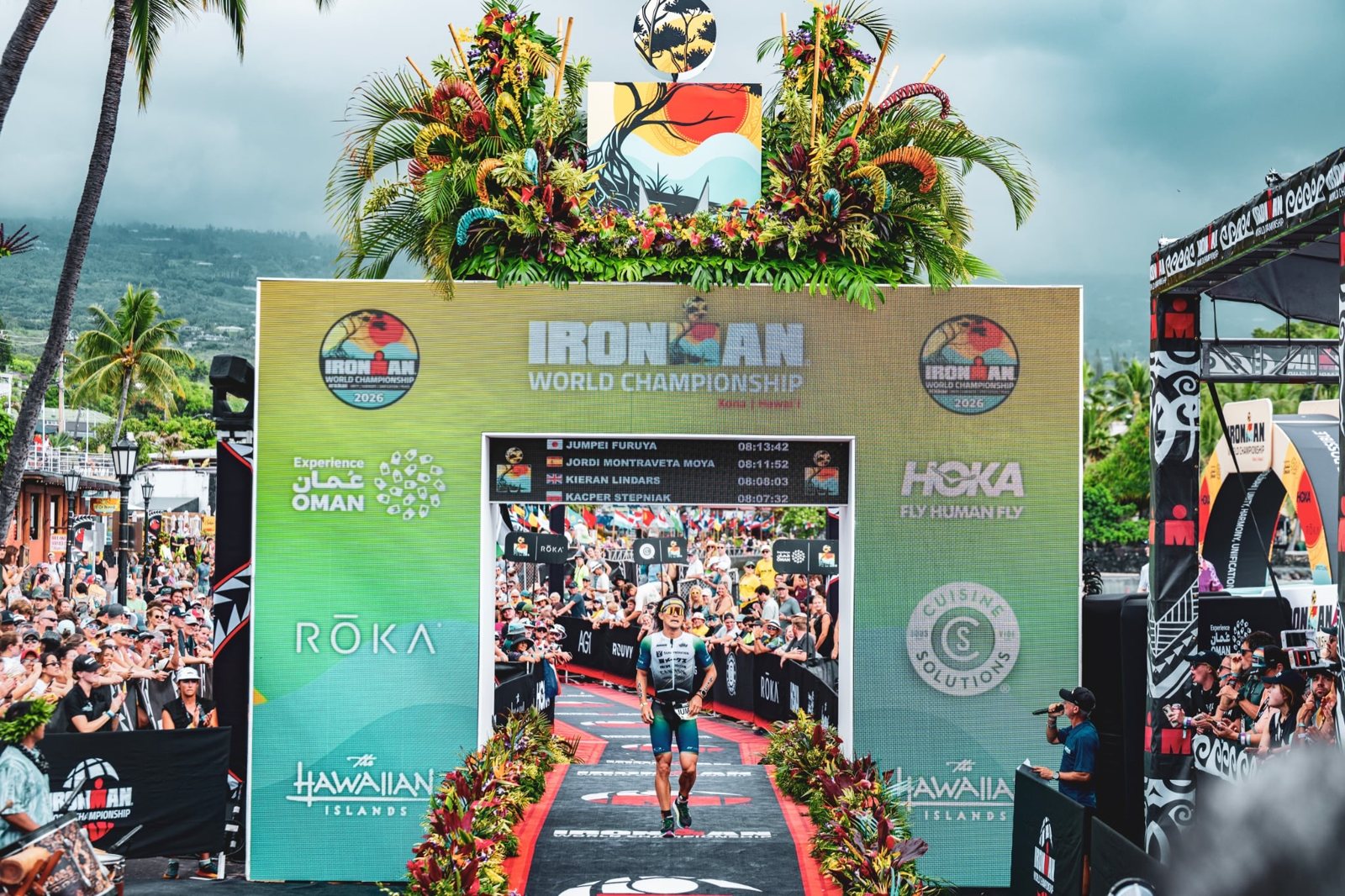
Japan's Jumpei Furuya was the first Japanese male pro to race Kona in 9 years. He came up through short-course racing, won the Japanese national title in 2015, and was ranked No. 1 in Japan three years straight, from 2016 to 2018. He only moved to long course full-time in 2025, and that December he went 7:43:04 at IRONMAN Western Australia, the fastest IRONMAN ever by an Asian athlete, which also earned him his Kona slot.
Here's how his first Kona played out:
| Checkpoint | Position | Gap to leader |
|---|---|---|
| Out of the swim | 8th | 12 sec |
| Bike, ~27 km | 6th | ~1 min |
| Bike, ~127 km | 14th | ~7.5 min |
| Off the bike (T2) | 24th | 13:42 |
| Marathon, 35 km | 18th | |
| Finish, 8:13:41 | 19th | 26:14 |
Positions are within the men's pro field only.
Over the last 50 km of the bike, the return leg on the Queen K, he lost 6 minutes and 10 places in one stretch. He ran the first half of the marathon in 1:22:48 and fought his way up to 18th by 35 km. The second half took 1:31:10, more than 8 minutes slower; the median for men's pro finishers was a little over 4 minutes. He chased hard early and paid for it late, but still held on to the top 20.
Before the race he said publicly that his goal was the top 20, and he delivered. I have a lot of respect for that. Afterward he said his ultimate goal is a top-8 finish at Kona, and after this race, he can see exactly what that will take.
Put him next to the top 8 and you can see right where the gap is:
| Top 8 | Jumpei Furuya | |
|---|---|---|
| Swim | 48 to 50 min (except Sam Long, 54:47) | 48:29 |
| Bike | 4:11 to 4:21 | 4:25:38 |
| Run | 2:36 to 2:49 | 2:53:59 |
In his very first Kona, his swim was already at a world top-8 level. The gap was in the last 50 km of the bike and the second half of the marathon. That's this year's Kona in a nutshell: plenty of athletes could stay in touch early on. What really pulled the field apart was the last few hours of the race.
8. Racing in the Heat: Three Lessons for Age-Groupers
1. Staying healthy during race week is part of race prep. Wash your hands often, avoid crowds, wear a mask on the plane. In the final week, these things that have nothing to do with training matter more than any single workout.
2. Problems don't always wait until late in the race. For several athletes, the cramping and vomiting started in the swim or early on the bike. In hot, humid conditions, your pacing and fueling have to follow the plan from the very first minute.
3. Fueling that works at home won't necessarily work somewhere else. The fueling plan Olij had used for three years still went wrong at Kona. If you're racing somewhere hot, rehearse your fueling in similar temperature and humidity. How many carbs to take per hour and how to train your gut are covered in 60 Grams an Hour Isn't the Limit Anymore.
Kona has been raced for almost 50 years, and nobody can claim to have cracked it. Knibb and Lucy Charles-Barclay are coached by the same coach. Both went down late in the race at Kona last year. This year one of them won, and the other stopped again at about the same point. Even the best coaching teams in the world are still searching for answers. So am I.
Kona 2026 FAQ
Who won Kona 2026, and what were the winning times?
Vincent Luis of France won the men's race in 7:47:27, and Taylor Knibb of the US won the women's race in 8:36:29. Luis was 11 and a half minutes off the 2024 course record, and Knibb was 8 minutes slower than the 2025 winning time.
What was the DNF rate at Kona 2026?
Of the 2,417 athletes who started, 155 dropped out, a DNF rate of 6.4%, the highest since 2022. In the pro field, 22 athletes didn't finish: 21% of the men and 23% of the women.
Why was Kona 2026 harder than previous years?
Rain from the night before lasted into race morning, and the swim was rough. Average wind during the bike was about 30 km/h, the highest of the last six editions, and the heat index during the afternoon run was around 33°C. Compared with their own results at other IRONMAN races, the same athletes were 6.6% slower overall, 14% slower in the swim, and 5.1% slower on the bike.
Were there any Asian pros at Kona 2026?
Just one across the men's and women's pro fields: Japan's Jumpei Furuya, who finished 19th in the men's pro race in 8:13:41.
Editor's note: Results, splits, and DNF rates are compiled from official IRONMAN results. Course difficulty and on-course weather come from UNPACE's analysis. Early-morning humidity is from hourly observations at Kona airport. Reasons for pro DNFs are compiled from the athletes' own social media and race coverage.